Does Lighting Affect Crested Gecko Morph Colors?
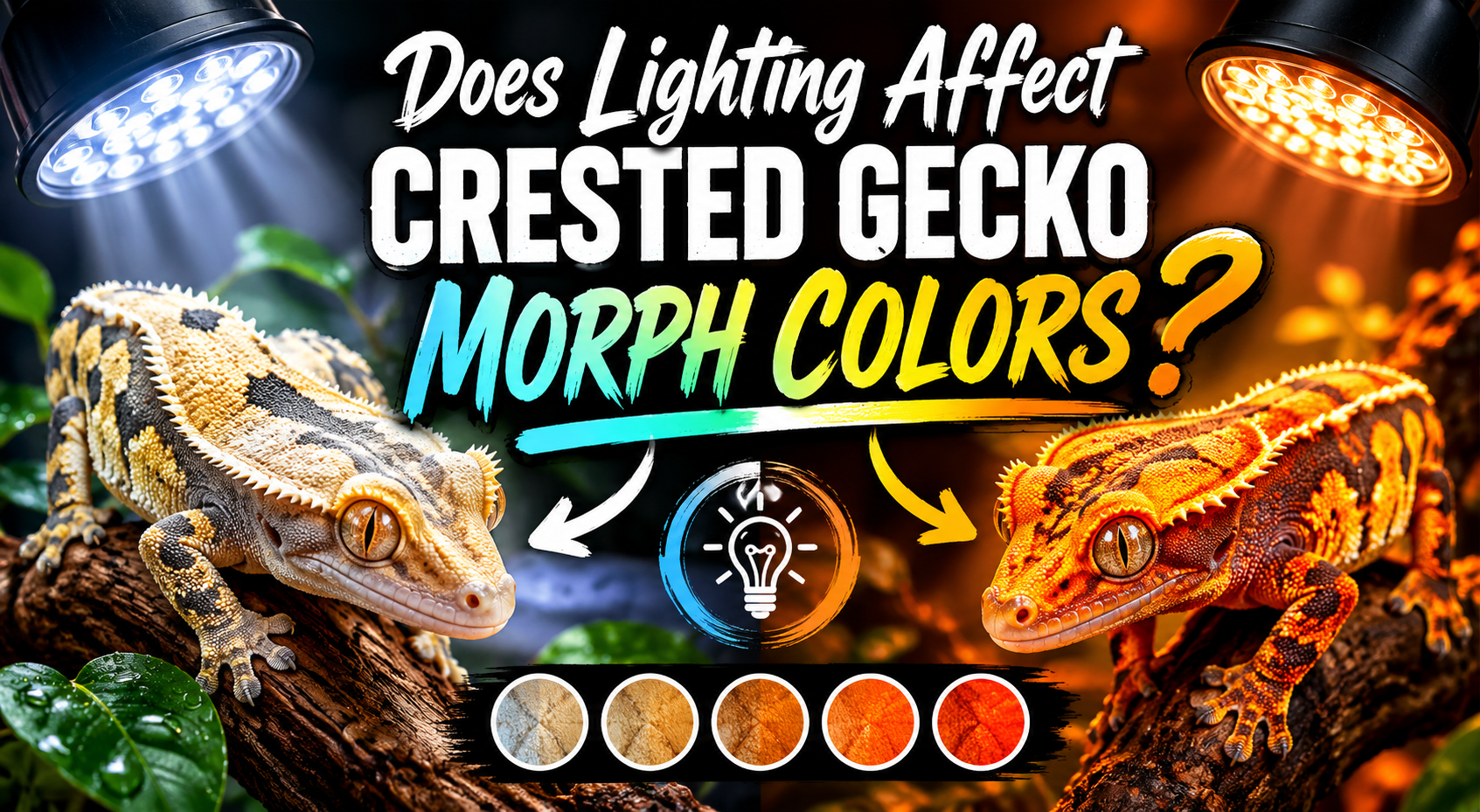
If you’ve ever looked at your crested gecko in the morning and thought, “Why does my gecko look darker today?” — you’re not imagining things.
Lighting can absolutely influence how a crested gecko’s colors appear. However, there’s a major difference between lighting changing a gecko’s genetics and lighting simply affecting the way colors are displayed.
For keepers interested in morph quality, photography, breeding, or simply understanding their pet better, lighting plays a surprisingly important role. The type of light, intensity, temperature, and even the time of day can dramatically affect how a crested gecko’s morph looks to the human eye.
If you’re new to morph genetics, you may also want to read Crested Gecko Morphs: The Complete Guide and Why Isn’t My Crested Gecko Showing Its Morph? as companion resources.
Why Crested Gecko Colors Appear Different
Crested geckos naturally change appearance throughout the day. This process is often referred to as “firing up” and “firing down.”
When a gecko is fired up, its colors become deeper, richer, and more vibrant. Reds appear darker, creams become more contrasted, and patterns stand out more clearly. When fired down, the same gecko may look pale, muted, or washed out.
Lighting influences how dramatic these differences appear.
Bright white lighting tends to reveal more detail and contrast, while dim or yellow-toned lighting can soften or distort morph colors. This is why a gecko photographed under one bulb may look completely different under another.
For example, a harlequin morph may appear cream-colored under daylight LEDs but slightly yellow under warm household bulbs. Likewise, dark-based morphs like brindles or tiger patterns often look much bolder under cooler lighting conditions.
You may also enjoy reading Does Shedding Change Crested Gecko Color? since shedding cycles can further affect appearance. Also, check out our article on firing up and down.
The Difference Between Perceived Color and Actual Morph Genetics
One of the biggest misconceptions among beginners is believing lighting permanently changes a morph. It does not.
Lighting cannot genetically alter a crested gecko. A pinstripe remains a pinstripe regardless of the bulb being used. What changes is how your eyes interpret the reflected colors.
Think of it like taking a photograph outdoors versus indoors. The subject is the same, but the lighting dramatically changes the final image.
This matters especially for breeders selling geckos online. Poor lighting can make a morph appear more vibrant than it truly is, leading to unrealistic expectations for buyers.
That’s why experienced breeders often photograph geckos under neutral white lighting with minimal editing. Accurate representation builds trust and helps buyers understand what the gecko truly looks like.
If you’re interested in morph value and presentation, consider reading Most Expensive Crested Gecko Morphs and Expensive vs Cheap Morphs Revealed.
Natural Light vs Artificial Light
Natural daylight is generally the best lighting source for accurately displaying morph colors. Sunlight contains a balanced spectrum that reveals true contrast and pigmentation.
However, direct sunlight should never be used to heat a crested gecko enclosure. Glass tanks trap heat quickly and can become dangerous within minutes.
Instead, indirect natural light near a window can help showcase colors naturally while maintaining safe temperatures.
Artificial lighting varies significantly depending on bulb type.
LED Lighting
LED lights are popular among reptile keepers because they produce little heat and consume minimal electricity. High-quality daylight LEDs often provide the clearest representation of morph colors.
Cool white LEDs usually make patterns appear sharper and more defined. Cream patterns become brighter, while dark bases gain stronger contrast.
Warm Household Bulbs
Warm-toned bulbs create a yellow or orange tint. While aesthetically pleasing, they can distort certain morphs. Creams may look yellowed, and reds may appear more orange than they truly are.
UVB Lighting
Low-level UVB is sometimes used for crested geckos, although it is not strictly required in most setups. UVB itself does not directly change morph coloration, but healthier geckos with proper husbandry often display stronger overall coloration.
Good health contributes to better skin condition, more consistent firing, and brighter appearance overall.
For habitat setup advice, check out Best Tanks for Crested Gecko Morphs.
Can Lighting Stress Affect Color?
Yes — indirectly.
Crested geckos react to environmental conditions, including excessive brightness. Since they are nocturnal, extremely intense lighting can sometimes contribute to stress.
A stressed gecko may darken in color, remain fired up longer, or behave differently. In some cases, owners mistakenly assume the lighting improved the morph when the gecko is actually displaying stress coloration.
Signs of lighting-related stress may include:
- Hiding excessively
- Refusing food
- Remaining dark for prolonged periods
- Increased jumping or frantic movement
Moderate lighting with a proper day-night cycle is usually ideal.
Learn more about stress and morph health here: Crested Gecko Morph Health Mastery
Why Morph Photos Online Can Be Misleading
If you browse morph listings online, you’ll notice some geckos look unbelievably vibrant. Sometimes this is due to genetics, but lighting and editing often play a huge role.
Professional photography setups may use:
- Ring lights
- High saturation settings
- Contrast enhancement
- Specialized white balance correction
This can exaggerate reds, creams, oranges, and pattern contrast.
Responsible breeders typically provide multiple photos under normal lighting conditions so buyers know what to expect.
If you’re considering purchasing high-end morphs, it helps to understand realistic color variation first. You might enjoy reading the following:
- Why Is My Crested Gecko Morph Turning White
- Why Is My Crested Gecko Morph Turning Dark
- Best Crested Gecko Morphs for Beginners
Does Lighting Influence Juvenile Development?
There is limited evidence suggesting lighting alone permanently changes morph expression during growth. Genetics remain the primary factor determining color and pattern.
However, healthy environmental conditions absolutely influence overall appearance.
A gecko raised with proper nutrition, hydration, humidity, and stress reduction will generally display better skin quality and stronger coloration than one kept in poor conditions.
Diet is especially important. Nutritional deficiencies can dull appearance and reduce overall vibrancy.
For more on this topic, see: Feeding for Crested Gecko Health and Color
Best Lighting for Displaying Morph Colors
For most keepers, a neutral daylight LED between 5000K and 6500K offers the most accurate representation of morph colors.
This lighting range helps reveal:
- Clean cream patterns
- Accurate reds and oranges
- Sharp pinstriping
- Natural base coloration
Avoid excessively blue or yellow lighting if your goal is accurate morph viewing or photography.
Maintaining a regular light cycle of approximately 12 hours on and 12 hours off also helps support natural behavior patterns.
Final Thoughts
Lighting absolutely affects how crested gecko morph colors appear, but it does not change the genetics behind the morph itself. The right lighting can enhance contrast, reveal hidden pattern details, and make colors appear more vibrant, while poor lighting can dull or distort them.
Understanding this difference helps keepers make better decisions when choosing enclosure lighting, photographing geckos, or evaluating morph quality.
At the end of the day, genetics determine the morph — lighting simply determines
how clearly you see it.