Why Is My Crested Gecko Turning Dark?
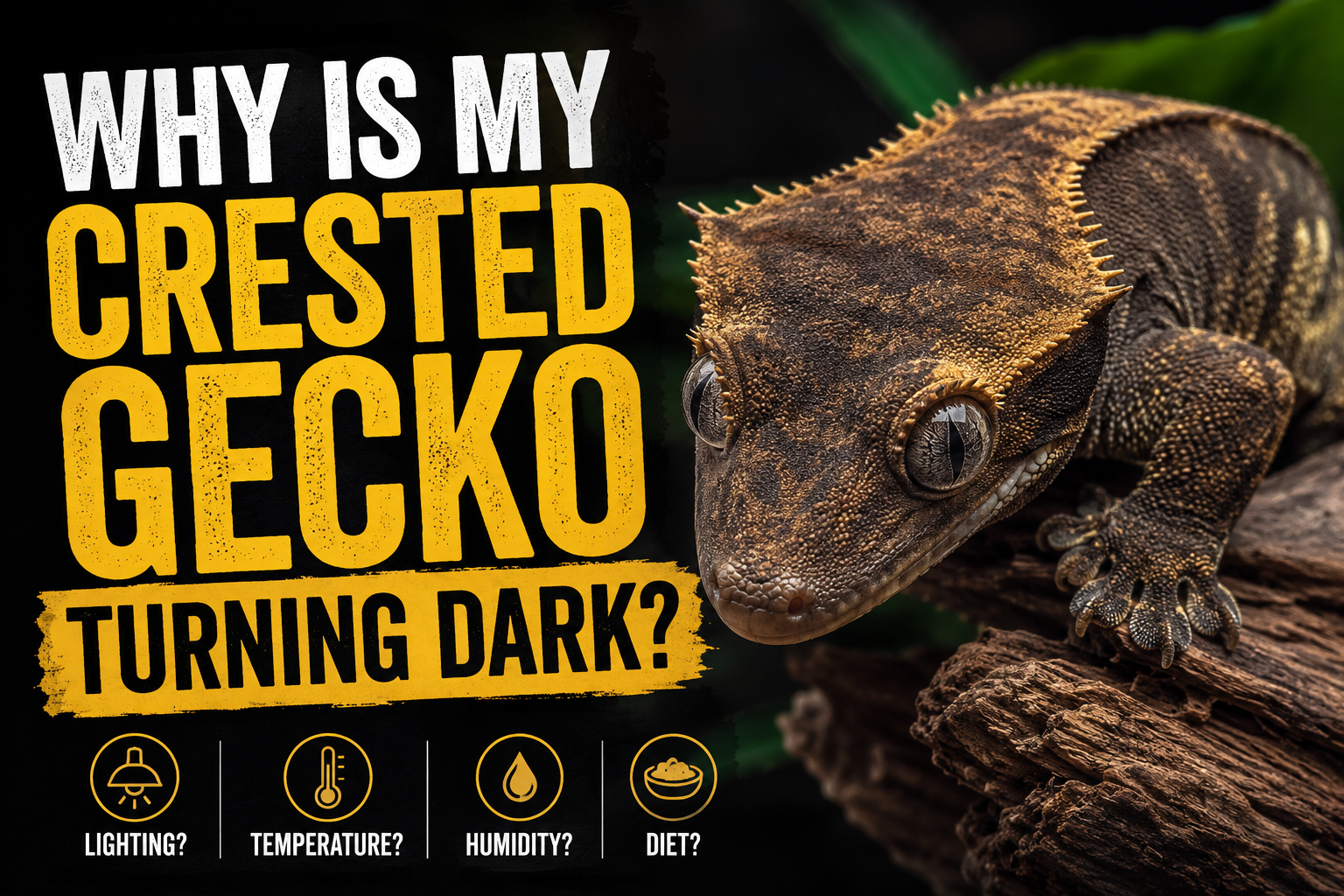
If you’ve noticed your crested gecko suddenly looking darker than usual, don’t panic. In most cases, color changes are completely normal and are simply part of how these fascinating reptiles communicate, regulate themselves, and respond to their environment.
However, there are times when dark coloration can signal stress, illness, or husbandry problems that need attention.
Understanding why your crested gecko is turning dark can help you distinguish between healthy behavior and warning signs before a small issue becomes a serious problem.
Crested Geckos Naturally Change Color
One of the most interesting traits of the Crested Gecko is its ability to change color intensity. Unlike chameleons, they do not rapidly shift between dramatic colors, but they can become lighter or darker depending on several factors.
This process is often called “firing up” and “firing down.”
When a crested gecko is fired up, its colors become deeper, darker, and more vibrant. Reds appear richer, oranges become brighter, and patterns become more pronounced. When fired down, the gecko appears pale, muted, or washed out.
This is completely natural and happens daily.
Learn more about morphs and coloring here:
- Crested Gecko Morphs: The Complete Guide (2026)
- Fired Up vs Fired Down Explained
- How Diet Affects Color, Growth, and Health
Nighttime Activity Often Causes Darkening
Crested geckos are nocturnal animals, meaning they become active at night. Many owners notice their gecko turns darker in the evening and lighter during the day.
This is one of the most common reasons for dark coloration.
At night, a fired-up appearance helps the gecko become more active and alert. You may notice darker coloration when:
- Hunting insects
- Exploring the enclosure
- Climbing glass
- Becoming excited during feeding time
If your gecko turns dark at night but returns to normal during the day, this is usually healthy behavior.
Temperature Can Affect Color
Environmental temperature plays a major role in crested gecko coloration. When temperatures drop, geckos often darken their skin to absorb and retain heat more efficiently.
If your enclosure becomes too cool, your gecko may remain darker for extended periods.
Ideal temperatures for crested geckos are generally:
- 72–78°F during the day
- Slight nighttime drops are acceptable
- Temperatures above 82°F can become dangerous
A gecko that is too cold may also appear sluggish and inactive in addition to turning dark.
For temperature tips in your enclosures, view the helpful articles below:
Stress Is Another Common Cause
Stress is one of the biggest reasons a crested gecko may stay dark for long periods. A stressed gecko may remain fired up continuously rather than cycling naturally.
Stress can come from many sources, including:
- Excessive handling
- Loud noises
- Improper humidity
- Small enclosure size
- Aggressive tank mates
- Sudden environmental changes
Newly purchased geckos are especially prone to stress darkening. It may take several weeks for a new gecko to settle into its environment.
Signs of stress alongside dark coloration may include:
- Refusing food
- Jumping frantically
- Hiding constantly
- Tail twitching
- Weight loss
If you recently moved your gecko into a new enclosure, some temporary darkening is perfectly normal.
Shedding Can Temporarily Change Appearance
Before shedding, crested geckos often develop a dull, grayish, or darker appearance. Their skin may look dirty or faded shortly before the shed begins.
This stage usually lasts 24–48 hours.
After shedding, the gecko often appears brighter and cleaner with more vivid coloration.
Young geckos shed more frequently because they grow rapidly, while adults shed less often.
If your gecko looks darker but still behaves normally, check for signs of an upcoming shed:
- Reduced appetite
- Increased hiding
- Cloudy appearance
- Loose skin around toes or tail
Humidity Problems Can Trigger Dark Colors
Improper humidity is another major factor that can influence coloration and stress levels.
Crested geckos require:
- Daytime humidity around 50–60%
- Nighttime humidity spikes around 70–80%
If humidity remains too low for long periods, your gecko may darken due to dehydration and stress. On the other hand, constantly wet conditions can also create discomfort and lead to health issues.
Using a digital hygrometer is highly recommended for monitoring enclosure conditions accurately.
Illness May Cause Persistent Darkening
Although many color changes are harmless, prolonged dark coloration combined with other symptoms may indicate illness.
Warning signs include:
- Lack of appetite
- Rapid weight loss
- Weakness
- Sunken eyes
- Trouble climbing
- Swollen joints
- Labored breathing
A sick crested gecko may remain dark because its body is under physical stress.
Parasites, dehydration, overheating, and infections can all contribute to abnormal coloration. If your gecko appears consistently dark and unhealthy for several days, a reptile veterinarian should evaluate it.
For tips on how to make your morph maintain optimal health, view the guide below:
Some Morphs Naturally Appear Darker
Certain crested gecko morphs naturally display darker pigmentation than others. Morphs with heavy patterning or dark base colors may appear almost black when fully fired up.
For example:
- Dark harlequins
- Chocolate-based morphs
- Some brindles
- Certain dalmatians
These geckos may simply show stronger contrast during nighttime activity.
For comparisons on different morphs, visit the guide here:
Final Thoughts
In most situations, a crested gecko turning dark is completely normal and simply part of its natural behavior. Temperature changes, nighttime activity, stress levels, shedding cycles, and environmental conditions can all influence coloration.
The key is observing the gecko’s overall behavior rather than focusing on color alone.
A healthy crested gecko that eats well, climbs normally, maintains weight, and remains active is usually fine — even if it occasionally turns very dark. However, persistent dark coloration combined with lethargy, appetite loss, or unusual behavior may signal a deeper issue that should be addressed quickly.
By maintaining proper temperatures, humidity, nutrition, and enclosure setup, you can help your crested gecko stay healthy, comfortable, and
vibrant for years to come.