Crested Gecko Starter Setup Guide (Beginner-Friendly)
So…
You finally decided to get a Crested Gecko.
Good choice.
These little prehistoric weirdos are one of the easiest reptiles to keep alive… if you set them up correctly from day one.
But here’s where most beginners screw it up:
They buy the gecko first…
Then panic-buy random junk from pet stores that either:
- Costs too much
- Doesn’t work
- Or turns the enclosure into a tiny reptile sauna from hell
That’s why this guide exists.
By the end of this article, you’ll know exactly how to build a proper crested gecko setup without wasting money or accidentally stressing your gecko into hiding for three straight weeks.
And if you’re still deciding which morph to buy, check out our complete Crested Gecko Morphs: The Complete Guide (2026) before you start shopping.
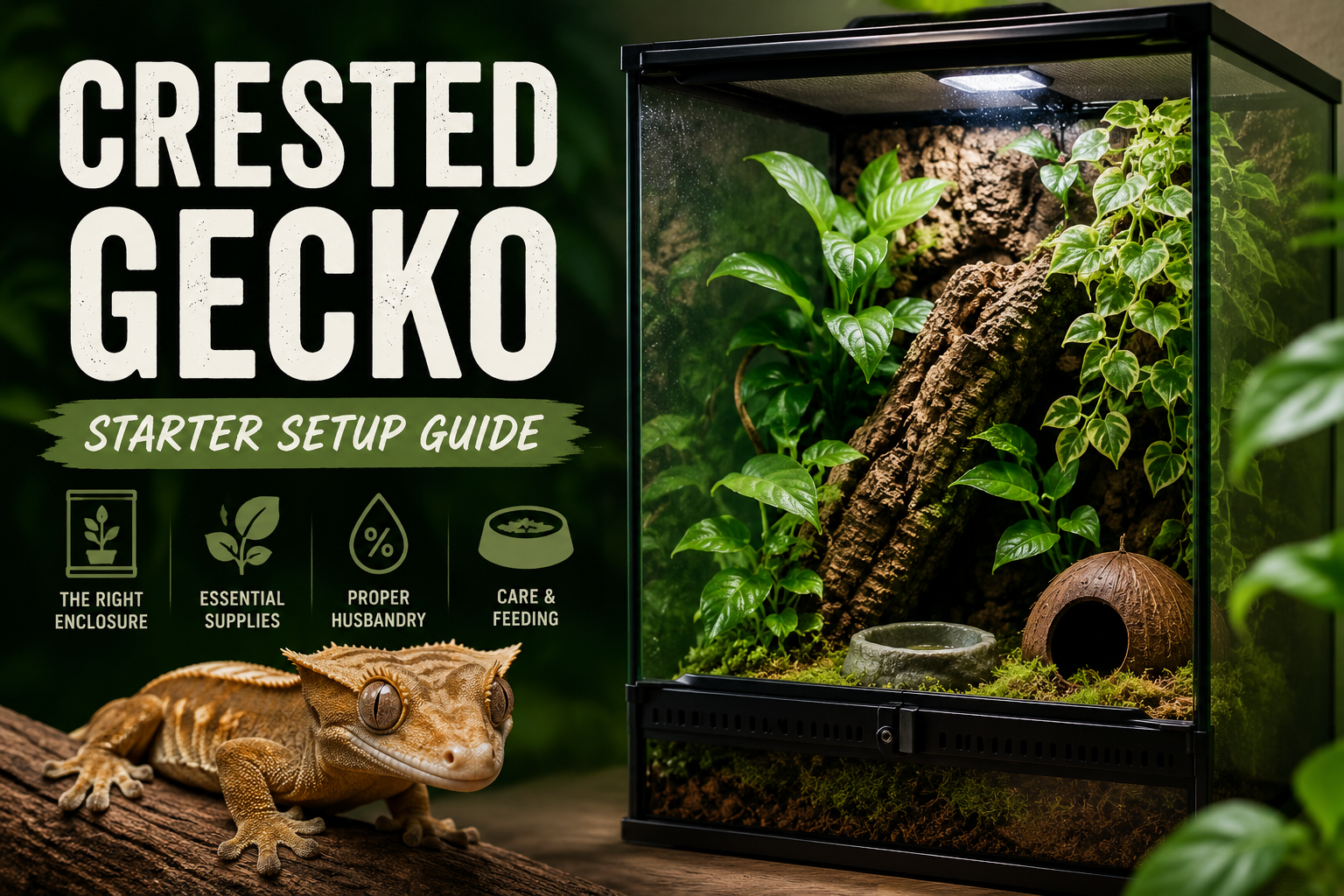
What You Actually Need for a Crested Gecko Setup
Here’s the good news:
Crested geckos do not require complicated setups like some reptiles.
You don’t need:
- Scorching heat lamps
- Massive desert tanks
- Or expensive UV systems right away
What you do need is a setup that controls:
- Humidity
- Airflow
- Climbing space
- And temperature
That’s it.
Simple beats fancy every time.
Choosing the Right Tank Size
This is where beginners either go too small…
…or buy a giant enclosure that overwhelms a baby gecko.
Best Tank Size for Juveniles
For baby and juvenile geckos:
12x12x18 works well
Smaller enclosures help young geckos:
- Find food easier
- Feel secure
- And adjust faster
Best Tank Size for Adults
For adults:
18x18x24 is the standard minimum
Bigger is usually better as long as you provide enough coverage and climbing areas.
Remember:
Crested geckos are arboreal.
Translation?
They want HEIGHT more than floor space.
Glass vs PVC Enclosures
You’ll see endless arguments online about this.
Here’s the simple truth:
Glass tanks are great for beginners.
They:
- Hold humidity well
- Look nice
- And are easy to find
PVC enclosures are lighter and hold heat more consistently, but they’re usually more expensive.
If you’re just starting out, don’t overthink it.
A good glass terrarium works perfectly.
The Best Substrate for Crested Geckos
Substrate is just the material lining the bottom of the enclosure.
And no…
Your gecko doesn’t care if it’s “bioactive rainforest premium jungle blend ultra tropical edition.”
Beginners should keep it simple.
Beginner-Friendly Substrates
Good options include:
- Paper towels
- Coco fiber
- Reptile soil mixes
Paper towels are underrated.
They make:
- Cleaning easier
- Poop monitoring simple
- And quarantine stress-free
Once you gain experience, you can experiment with bioactive setups later.
Humidity: The Secret Most Beginners Mess Up
Crested geckos need humidity.
But too much humidity constantly?
That’s where problems begin.
Ideal Humidity Levels
Aim for: 60–80% humidity, with drying periods between mistings.
You want a cycle:
- Mist
- Humidity rises
- Enclosure slowly dries
Constant wetness creates mold, bacteria, and respiratory problems.
A simple spray bottle works fine in the beginning.
No need to turn your enclosure into the Amazon rainforest.
Temperature Requirements
Here’s something many beginners don’t realize:
Crested geckos actually prefer cooler temperatures.
Ideal Temperature Range
Best range: 70–75°F during the day, slight nighttime drop is fine
Danger zone:
Prolonged temperatures above 80°F
Too much heat stresses them quickly.
That’s why many keepers don’t even use heat lamps unless their room gets unusually cold.
Do Crested Geckos Need UVB Lighting?
This topic starts more internet fights than morph genetics.
Technically?
Crested geckos can survive without UVB.
But many keepers report:
- Better activity
- Healthier behavior
- And improved overall wellness with low-level UVB
A small, low-output UVB bulb is a smart upgrade if your budget allows.
The Importance of Clutter and Hiding Spots
An empty tank stresses geckos out.
They want:
- Leaves
- Vines
- Branches
- Cork bark
- And places to disappear
If your enclosure looks too “clean”... it probably feels unsafe to your gecko.
Fake Plants vs Real Plants
Fake plants are perfectly fine for beginners.
Real plants look amazing, but they require:
- Maintenance
- Drainage
- And more experience
There’s no shame in starting simple.
Feeding Setup Basics
Crested geckos don’t need complicated feeding systems.
You mainly need:
- A feeding ledge
- Water dish
- And quality crested gecko diet
Most beginners overfeed insects and underuse prepared diets.
A good commercial gecko diet should be the foundation.
For more nutrition help, read our [Best Food for Crested Geckos] (internal link) guide.
Common Beginner Setup Mistakes
This is where people accidentally create problems.
Mistake #1 — Too Much Heat
Crested geckos are not desert reptiles.
Overheating kills faster than slightly cooler temperatures.
Mistake #2 — Bare Enclosures
No clutter = stressed gecko.
Simple.
Mistake #3 — Constantly Handling a New Gecko
Your gecko needs time to settle in.
Leave them alone for at least the first 1–2 weeks except for feeding and maintenance.
Mistake #4 — Buying Cheap Equipment Twice
Cheap hygrometers and thermometers often fail.
Buy decent monitoring tools once instead of replacing junk repeatedly.
Bioactive Setups: Should Beginners Try Them?
Bioactive setups can look incredible.
They use:
- Live plants
- Cleanup crews
- Natural ecosystems
But beginners often jump into bioactive setups before understanding basic husbandry.
That’s backwards.
Master:
- Humidity
- Temperature
- Feeding
- And cleaning first
Then go bioactive later if you want.
Choosing the Right Morph for Your Setup
Good news:
Morphs do not require different care.
A Harlequin setup is basically the same as a Flame or Dalmatian setup.
If you’re still comparing morphs, visit:
Final Thoughts
Here’s the truth most beginners need to hear:
Your crested gecko does not need a “perfect” setup.
It needs:
- Stable temperatures
- Proper humidity
- Hiding places
- Food
- And minimal stress
That’s it.
Focus on consistency instead of obsessing over fancy equipment.
Because the keepers with the healthiest geckos usually aren’t the ones buying the most expensive gadgets…
They’re the ones paying attention.
And once your setup is dialed in, you can start exploring the fun part: different morphs, genetics, breeding projects, and advanced care techniques.
If you haven’t already, start with our complete
Crested Gecko Morphs Guide eBook to explore the most popular morphs, prices, and beginner recommendations.