How to Identify Crested Gecko Morphs (Beginner-Friendly Guide)
If you’ve ever stared at your Crested Gecko and thought…
- “Wait… is this a Harlequin? A Flame? A Pinstripe? Or some weird combo I can’t figure out?”
Relax.
You’re not alone.
Crested gecko morph identification confuses a LOT of beginners because these geckos can change color, combine traits, and look completely different depending on age, lighting, and whether they’re fired up or fired down.
And here’s the kicker…
Two geckos can technically be the same morph — and still look wildly different.
But once you understand a few simple visual clues, identifying crested gecko morphs gets much easier.
In this guide, you’ll learn:
- How morph identification actually works
- The key traits breeders look for
- The difference between major morphs
- How to avoid common beginner mistakes
- New to morphs entirely? Start with our Crested Gecko Morphs: The Complete Guide (2026)
What Is a Crested Gecko Morph?
A morph is simply a variation in:
- Color
- Pattern
- Markings
- Physical appearance
Some morphs have:
- Heavy cream patterns
- Stripes
- Spots
- Bold contrast
- Reduced pigmentation
Others are more subtle.
And unlike some reptiles, crested gecko morphs are usually polygenic, meaning multiple genes influence how they look.
That’s why morph identification isn’t always black and white.
- Learn more in our Crested Gecko Morph Genetics Explained
The 4 Main Things You Need to Look At
Most beginners overcomplicate this.
You really only need to focus on 4 things:
1. Base Color
First, ignore the pattern for a second.
Look at the gecko’s main body color.
Common base colors include:
- Brown
- Red
- Orange
- Yellow
- Cream
- Black/grey tones
Important:
A gecko’s color can change dramatically when it’s fired up.
2. Pattern Coverage
This is where most morph identification happens.
Ask yourself:
- Is there cream on the sides?
- Is the dorsal patterned?
- Are the legs patterned?
- How much of the body is covered?
For example:
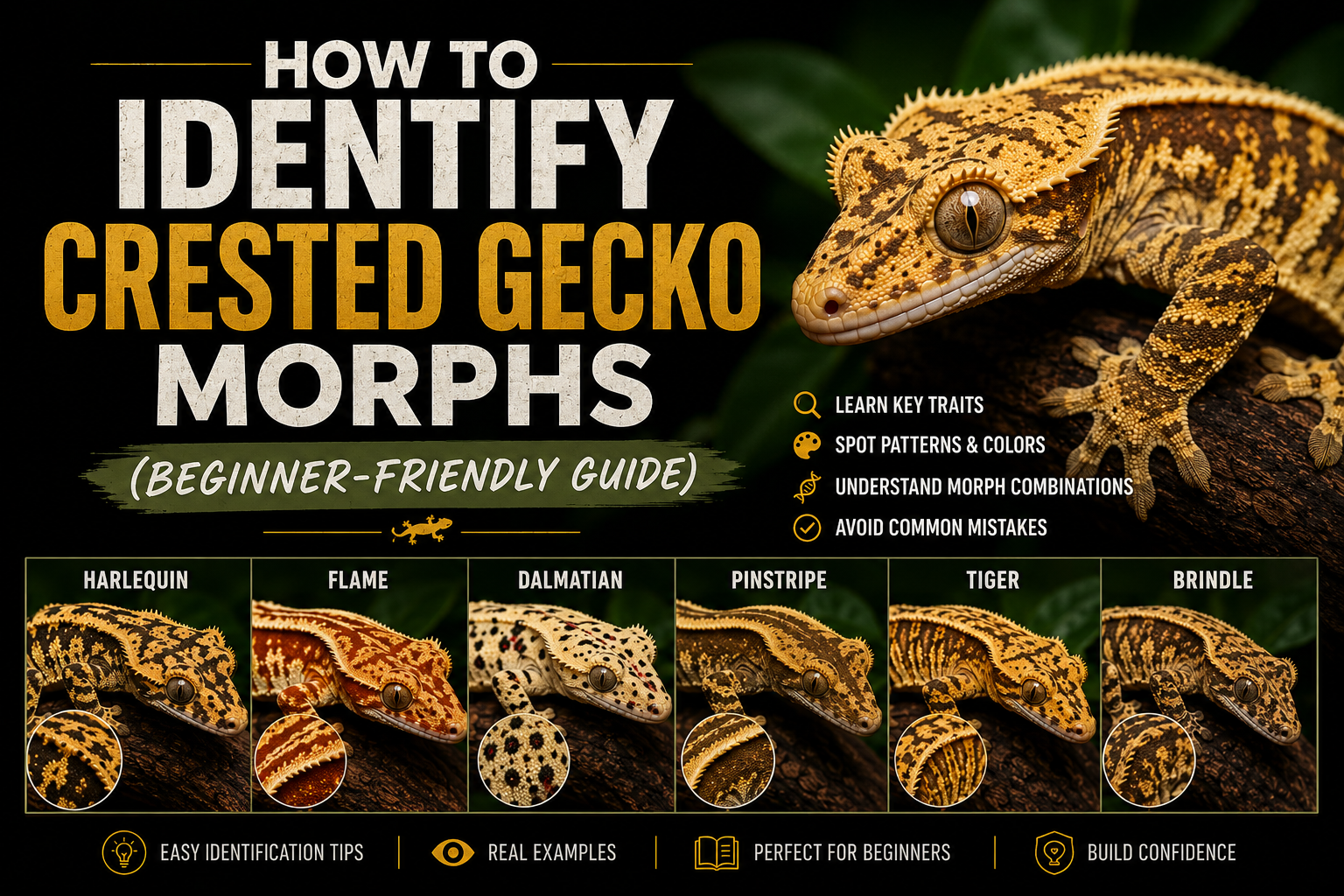
- Flames mainly show pattern on the back
- Harlequins show heavy side and leg patterning
- Extreme Harlequins have even MORE coverage
- Compare them directly in our Harlequin vs Flame Crested Gecko (internal link)
3. Spots, Stripes & Markings
Certain morphs are defined by specific markings.
Examples:
- Dalmatians = spots
- Pinstripes = raised cream dorsal lines
- Tigers = vertical striping
- Brindles = irregular striping
This is one of the fastest ways to narrow down a morph.
4. Contrast
Contrast is HUGE.
Some morphs have:
- Bright cream against dark brown
- Intense reds with yellow patterns
- Sharp separation between colors
High contrast usually increases value — especially in premium morphs.
- See pricing examples in our Crested Gecko Morph Price Guide
How to Identify Popular Crested Gecko Morphs
Now let’s break down the big ones.
Harlequin Crested Gecko
Look for:
- Heavy side patterning
- Cream on legs
- Strong contrast
Harlequins are one of the most recognizable morphs because the pattern spreads across the sides and limbs.
Flame Crested Gecko
Flames are simpler.
Traits include:
- Cream pattern mainly on the dorsal
- Little or no side patterning
- Cleaner appearance
Think: “Pattern on the back… not the sides.”
- Read: Flame Crested Gecko Guide (internal link)
Dalmatian Crested Gecko
Easy one.
If your gecko has:
- Black spots
- Red spots
- Freckles
…it’s likely a Dalmatian.
More spots = higher grade.
- Read: Dalmatian Crested Gecko Guide (internal link)
Pinstripe Crested Gecko
Pinstripes are identified by:
- Raised cream scales
- Lines running down the dorsal ridge
- Full pinstripes have continuous lines.
- Partial pinstripes have broken lines.
- Read: Pinstripe Crested Gecko Guide (internal link)
Tiger & Brindle Morphs
Tiger morphs have:
Bold vertical striping
Brindles:
More irregular, marbled striping
These two are commonly confused.
- Compare them here: Tiger vs Brindle Crested Gecko (internal link)
Fired Up vs Fired Down (The Thing That Confuses Everyone)
Here’s where beginners panic…
A gecko looks one color at night…
Then looks completely different the next morning.
Totally normal.
When fired up:
- Colors become darker or brighter
- Patterns become more visible
- Contrast increases
When fired down:
- Colors fade
- Patterns soften
- Contrast drops
This can make identification MUCH harder if you don’t know what’s happening.
- Read: Why Crested Geckos Change Color (internal link)
Can a Crested Gecko Have Multiple Morph Traits?
Absolutely.
In fact…
Most do.
You’ll often see combinations like:
- Harlequin Pinstripe
- Dalmatian Flame
- Extreme Harlequin Quad Stripe
This is why morph identification can feel messy at first.
The trick is learning to identify the dominant traits first.
Common Beginner Mistakes When Identifying Morphs
Let’s save you a lot of frustration.
Mistake #1: Identifying While Fired Down
Always try to identify morphs when the gecko is fully fired up.
That’s when:
- Colors
- Patterns
- Contrast
…are easiest to see.
Mistake #2: Focusing Only on Color
Color matters…
But pattern matters more.
Two red geckos can be completely different morphs.
Mistake #3: Ignoring the Legs & Sides
Beginners stare at the back only.
Big mistake.
Leg and side patterning often separate:
- Flames
- Harlequins
- Extreme Harlequins
Which Morph Is Best for Beginners?
If you’re new, these are great starter morphs:
- Harlequin
- Flame
- Dalmatian
- Bi-color
Why?
Because they’re:
- Affordable
- Easy to identify
- Widely available
Final Thoughts
At first, crested gecko morph identification feels like trying to decode some weird reptile secret language.
But after a while?
Your eye starts picking things up automatically.
You’ll notice:
- Pattern coverage
- Dorsal structure
- Spots
- Stripes
- Contrast
…without even thinking about it.
Start simple. Learn the core morphs first. Then move into advanced combinations later.
And remember…
Even experienced breeders debate morph labels sometimes.
So don’t stress about being perfect right away.