Crested Gecko Morphs: The Complete Guide (2026)
Crested gecko morphs can seem confusing at first—but once you understand the basics, identifying and choosing the right morph becomes much easier.
The Crested Gecko is one of the most popular pet reptiles in the world, and much of that popularity comes from its incredible variety of colors and patterns—known as morphs.
In this complete guide, you’ll learn:
- What crested gecko morphs are
- How to identify them
- The most popular morph types
- How much they cost
- Which morph is best for you
What Are Crested Gecko Morphs?
A morph is a variation in a crested gecko’s color, pattern, or physical traits caused by genetics.
Unlike some reptiles, crested geckos don’t have simple, single-gene morphs. Instead, most morphs are:
- Line-bred (selectively bred over time)
- Polygenic (influenced by multiple genes)
This is why no two crested geckos look exactly the same.
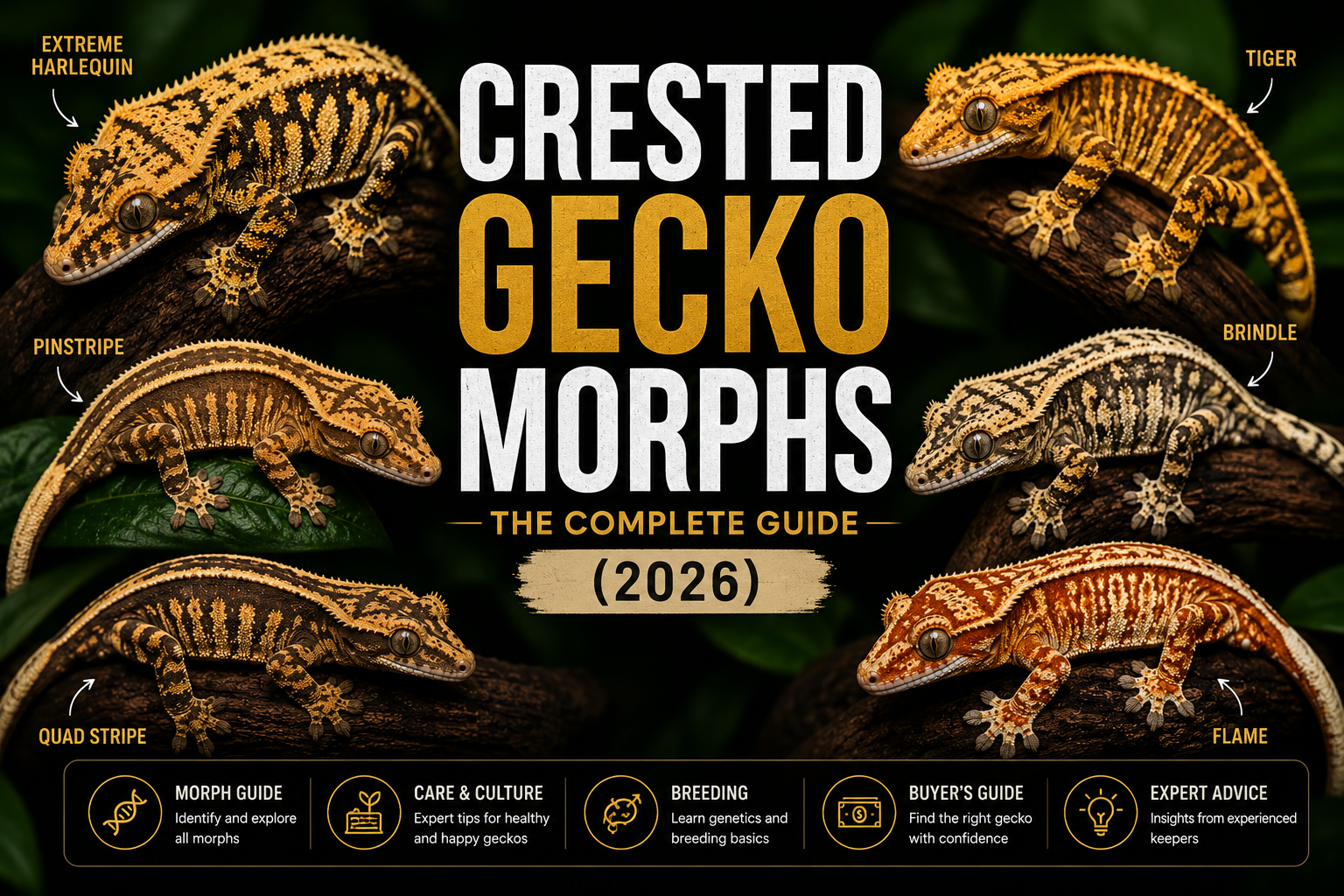
Morphs occur naturally through genetics and selective breeding, allowing breeders to create geckos with unique appearances. Popular morphs include flame, harlequin, pinstripe, dalmatian, tiger, and lily white varieties.
Some morphs display bright cream patterns, bold stripes, or spotted markings, while others feature unusual color combinations. Crested gecko morphs are highly valued by reptile enthusiasts because no two geckos look exactly alike.
Understanding morphs helps owners identify traits, predict breeding outcomes, and choose a gecko that matches their personal preferences and interests.
- Learn more in: Crested Gecko Morph Genetics Explained
How to Identify Crested Gecko Morphs
Identifying Crested Gecko morphs involves examining a gecko’s color patterns, markings, and physical traits. Popular morphs include flame, harlequin, dalmatian, pinstripe, tiger, and lily white. Look closely at the dorsal crest, side patterns, leg markings, and overall coloration.
Pinstripe morphs feature raised cream scales running along the back, while dalmatians display black or red spots across the body. Tiger morphs have bold vertical striping, and harlequins show heavy cream patterning on the legs and sides.
Because many geckos display mixed traits, identifying morphs often requires comparing multiple characteristics together rather than focusing on a single feature.
Identifying morphs comes down to three main factors:
1. Base Color
Common base colors include:
- Brown
- Red
- Orange
- Yellow
- Cream
2. Pattern Type
Patterns are what define most morphs:
- Side patterns
- Dorsal (back) patterns
- Spots or markings
3. Contrast
Higher contrast between base color and pattern usually increases value.
- Full guide: How to Identify Crested Gecko Morphs
Most Popular Crested Gecko Morphs
Among the many varieties of Crested Gecko, several morphs stand out as fan favorites due to their striking colors, patterns, and rarity. Popular morphs include the Flame, known for its bright dorsal coloring; the Harlequin, prized for its dramatic side patterns; and the Pinstripe, recognized by the raised scales running along its back.
The Dalmatian morph is loved for its black spots, while the Lilly White has become one of the most sought-after premium morphs because of its bold cream coloration and high contrast.
These morphs appeal to both beginner keepers and serious breeders, making them some of the most recognizable and desirable crested geckos in the hobby today.
Here are the most common and sought-after morphs:
Harlequin
- Heavy side and leg patterning
- High contrast colors
- Read more: Harlequin Crested Gecko Guide
Flame
- Cream pattern mostly on the back
- Minimal side markings
- Read more: [Flame Crested Gecko Guide] (internal link)
Dalmatian
- Black or red spots across the body
- “Super Dalmatian” = heavy spotting
- Read more: [Dalmatian Crested Gecko Guide] (internal link)
Pinstripe
- Lines running along the dorsal ridge
- Full vs partial pinstripe varieties
- Read more: [Pinstripe Crested Gecko Guide] (internal link)
Lilly White
- Bright cream/white coloration
- One of the most expensive morphs
- Read more: [Lilly White Crested Gecko Guide] (internal link)
Axanthic
- Black, white, and grey tones (no yellow/red)
- Rare and highly valued
- Read more: [Axanthic Crested Gecko Guide] (internal link)
Tiger & Brindle
- Vertical striping patterns
- Brindle = more complex striping
Bi-Color
- Two distinct colors with minimal pattern
- Simpler but still attractive
Extreme Harlequin
- Very heavy cream pattern coverage
- Higher-end version of Harlequin
- Compare morphs here: [Harlequin vs Flame Comparison] (internal link)
Fired Up vs Fired Down (Color Changes Explained)
“Fired up” and “fired down” are terms used to describe the color changes seen in Crested Geckos. A gecko is considered fired up when its colors appear darker, brighter, and more vibrant, often due to excitement, stress, temperature changes, humidity, or nighttime activity.
In contrast, a fired down gecko looks lighter, duller, or faded, usually when resting or sleeping during the day. These color shifts are completely normal and help owners better understand their gecko’s mood and environment.
Many morphs display dramatic transformations between fired up and fired down states, making color intensity and pattern contrast appear significantly different throughout the day.
Crested geckos naturally change color based on mood, temperature, and environment.
- Fired up → brighter, more vibrant colors
- Fired down → duller, muted tones
This can make morph identification confusing for beginners.
- Learn more: Fired Up vs Fired Down Guide
Do Crested Gecko Morphs Change Over Time?
Many owners wonder if crested gecko morphs stay the same throughout their lives, and the answer is both yes and no. A crested gecko’s genetic morph will not completely change, but its appearance can shift over time due to age, shedding, stress, diet, temperature, and lighting conditions.
Colors may become brighter, darker, or more defined as the gecko matures. Some juvenile geckos develop stronger patterns and markings as adults, while others may appear duller during certain periods. “Firing up” and “firing down” also affects coloration, causing temporary changes in brightness and contrast.
Although the morph itself remains genetically the same, its visual appearance can evolve significantly over the years.
As young geckos grow:
- Colors may darken or brighten
- Patterns may become more visible
- Contrast often increases
- Read: [Why Crested Geckos Change Color] (internal link)
Crested Gecko Morph Price Guide
A crested gecko morph price guide can help buyers and breeders understand the value of different morphs based on rarity, genetics, color, pattern quality, and lineage.
Common morphs like flame, tiger, and harlequin crested geckos typically range from $50 to $150, while premium morphs such as Lilly White, Cappuccino, Axanthic, and Super Dalmatian geckos can sell for several hundred or even thousands of dollars. Factors like age, sex, structure, and breeder reputation also influence pricing.
Female geckos with strong breeding potential usually command higher prices than males. Monitoring marketplaces and breeder listings regularly helps hobbyists stay informed about current crested gecko morph trends and values.
Prices vary widely depending on:
- Morph rarity
- Color contrast
- Pattern quality
- Breeder reputation
Typical Price Ranges:
- Basic morphs: $30–$100
- Mid-tier morphs: $100–$300
- Rare morphs: $300–$1,000+
- Full breakdown: Crested Gecko Morph Price Guide
Do Morphs Affect Care?
While crested gecko morphs dramatically change a gecko’s appearance, they usually do not require completely different care.
Most morphs thrive under the same basic conditions: proper humidity, moderate temperatures, a balanced diet, and a well-maintained enclosure. However, some morphs can have unique sensitivities or traits that owners should understand.
For example, lighter-colored morphs may show stress coloration differently, while certain selectively bred lines may be more delicate due to genetics.
Morphs with expensive or rare traits can also require more careful breeding management to avoid health issues. Overall, good husbandry matters far more than morph type when it comes to keeping a healthy crested gecko.
All crested gecko morphs have the same care requirements, including:
- Temperature: 65–75°F
- Humidity: 60–80%
- Diet: Commercial gecko diet + insects
- Setup guide: Crested Gecko Starter Setup
Best Crested Gecko Morphs for Beginners
For beginners entering the world of Crested Gecko care, some morphs are easier and more affordable to start with than others. Popular beginner-friendly choices include Flame, Harlequin, Tiger, and Bi-Color morphs because they are widely available, hardy, and relatively inexpensive compared to rare designer morphs.
These morphs still display beautiful colors and patterns while allowing new owners to learn proper feeding, humidity control, and handling without the pressure of caring for an extremely high-value gecko.
Beginner morphs are also great for building confidence before investing in more advanced morphs like Lilly Whites or Axanthics. Choosing a healthy, well-started gecko is more important than choosing the rarest morph available.
If you’re just starting, choose morphs that are:
- Affordable
- Easy to find
- Visually distinct
Top beginner-friendly morphs:
- Harlequin
- Flame
- Dalmatian
- Bi-color
- Full list: Best Morphs for Beginners
Choosing the Right Morph for You
Choosing the right crested gecko morph comes down to your personal taste, experience level, and budget. Some morphs, like flame or harlequin, are affordable and great for beginners, while rarer morphs such as lily whites or axanthics can be more expensive and sought after by collectors.
Consider the gecko’s coloration, pattern, and long-term care needs before making a decision. It’s also important to buy from a reputable breeder who prioritizes health and genetics.
Whether you want a vibrant display animal, a future breeding project, or simply a unique pet, selecting the right morph will make your crested gecko experience far more enjoyable and rewarding.
When selecting a crested gecko, consider:
- Your budget
- Preferred colors/patterns
- Availability
- Long-term goals (pet vs breeding)
There’s no “best” morph—only the one that fits your goals.
Where to Buy Crested Gecko Morphs
Finding quality crested gecko morphs starts with choosing reputable breeders and trusted reptile marketplaces. Many hobbyists purchase geckos through breeder websites, reptile expos, and online reptile communities where experienced sellers showcase healthy animals with clear genetics and lineage information.
It’s important to research the breeder’s reputation, read customer reviews, and ask questions about feeding habits, age, and health guarantees before making a purchase. Local reptile shops may also carry morphs, though availability can vary.
Whether you are searching for rare designer morphs or beginner-friendly geckos, buying from ethical breeders helps ensure you receive a healthy, well-cared-for crested gecko with strong genetics and proper care history.
In short, you can find morphs through:
- Reputable breeders
- Reptile expos
- Online marketplaces
- Trusted sources: Where to Buy Crested Gecko Morphs
Final Thoughts
Crested gecko morphs offer incredible variety, making them one of the most exciting reptiles to own. Whether you prefer bold patterns, bright colors, or rare genetics, there’s a morph for everyone.
If you’re just getting started, focus on learning how to identify morphs and choosing one that fits your budget and experience level.