Best Tanks for Crested Gecko Morphs
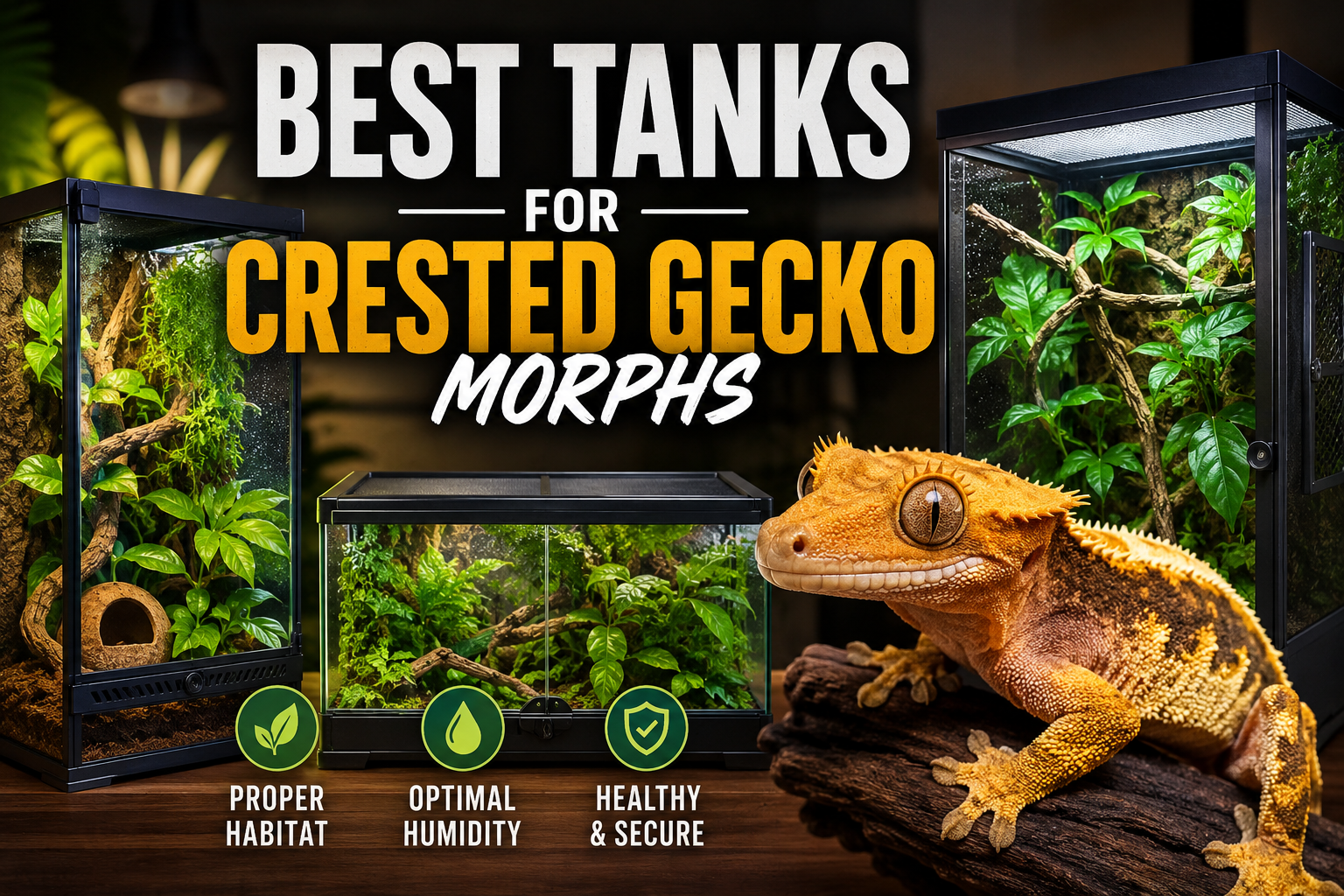
Choosing the right tank is one of the most important decisions you’ll make when caring for a Crested Gecko. While all morphs share similar care requirements, the enclosure you choose directly impacts your gecko’s health, stress levels, activity, and even coloration.
Many beginners assume that a tank is “just a tank,” but crested geckos are arboreal reptiles that need vertical space, airflow, humidity control, and climbing opportunities to thrive.
In this guide, we’ll break down the best tank options for crested gecko morphs, what size enclosure you actually need, and how to create a setup that works for both beginners and experienced keepers.
Why Tank Choice Matters for Crested Gecko Morphs
Crested geckos spend most of their lives:
- Climbing branches
- Hiding in foliage
- Exploring vertical spaces
A poor enclosure can lead to:
- Stress
- Poor feeding response
- Difficulty shedding
- Low activity levels
The good news is that crested geckos are relatively forgiving reptiles. Once you understand the basics, creating a proper habitat becomes much easier.
If you’re still learning about morphs and beginner-friendly varieties, check out:
These articles will help you better understand how different morphs fit into the hobby.
Glass vs PVC Tanks
Choosing between glass and PVC tanks is one of the biggest decisions crested gecko owners face. Both options offer unique advantages in temperature control, humidity retention, visibility, and durability. Understanding the pros and cons of each tank type can help you create a healthier, more comfortable environment for your gecko.
One of the biggest debates in the reptile world is whether glass or PVC enclosures are better.
Glass Tanks
Glass terrariums are the most popular choice for beginners.
Pros
- Easy visibility
- Widely available
- Great for humidity retention
- Attractive display setup
Cons
- Heavier
- More fragile
- Can lose heat faster
Glass tanks work especially well for:
- Juvenile geckos
- Display enclosures
- Bioactive setups
Many keepers choose front-opening glass terrariums because they make feeding and cleaning much easier.
PVC Enclosures
PVC enclosures are becoming more popular among advanced reptile keepers.
Pros
- Excellent insulation
- Lightweight
- Durable
- Better temperature stability
Cons
- More expensive
- Less visually appealing to some keepers
PVC setups are ideal for breeders or keepers maintaining multiple geckos.
Best Tank Size for Crested Geckos
Choosing the best tank size for your crested gecko is one of the most important decisions you’ll make as an owner. The right enclosure provides enough space for climbing, hiding, and healthy activity while reducing stress. A properly sized tank helps your gecko thrive, display natural behaviors, and stay comfortable for years.
Tank size depends largely on your gecko’s age.
Hatchlings and Juveniles
For babies and smaller juveniles:
- 12x12x18 inches works well
Smaller enclosures help young geckos:
- Find food easier
- Feel secure
- Avoid stress
Adult Crested Geckos
For adults:
- Minimum recommended size: 18x18x24 inches
However, many experienced keepers now recommend:
- 18x18x36 inches or larger
Why?
Because crested geckos LOVE vertical climbing space.
A taller enclosure encourages:
- Natural behavior
- Exercise
- Better enrichment
Large morphs like:
- Harlequins
- Lilly Whites
- Full Pinstripes
Often look especially impressive in taller display tanks.
If you’re still deciding on morphs, visit:
Front-Opening vs Top-Opening Tanks
Choosing between front-opening and top-opening tanks can dramatically affect your crested gecko’s comfort, stress levels, and daily care routine. Front-opening enclosures offer easier access and a more natural interaction style, while top-opening tanks are often cheaper and simpler.
Understanding the pros and cons of each helps you create a safer, more practical habitat.
Front-Opening Tanks (Recommended)
These are generally the best option.
Advantages
- Easier feeding access
- Less stressful for geckos
- Better maintenance access
- More natural interaction
Crested geckos can become stressed when approached from above because predators in the wild attack from overhead.
Top-Opening Tanks
These are more common in converted aquariums.
Downsides
- Harder maintenance
- Increased escape risk
- More stressful handling
They can still work, but front-opening terrariums are much more practical long-term.
Ventilation and Humidity Balance
Proper ventilation and balanced humidity are essential for keeping crested geckos healthy and stress-free. Good airflow helps prevent mold, bacteria, and respiratory issues, while proper humidity supports shedding, hydration, and overall comfort.
Finding the right balance creates a stable environment that closely mimics the gecko’s natural tropical habitat.
Crested geckos require:
- Moderate humidity
- Proper airflow
Too much humidity without ventilation can lead to:
- Mold
- Respiratory issues
- Bacteria buildup
The ideal enclosure maintains:
- Humidity around 50–80%
- Good cross ventilation
Mesh-top terrariums are popular because they help regulate airflow while still retaining enough moisture.
Best Tank Features to Look For
Choosing the right tank is one of the most important steps in keeping your crested gecko healthy, active, and stress-free. The best tanks combine proper ventilation, climbing space, humidity control, and easy access for cleaning and feeding.
A well-designed enclosure not only improves your gecko’s quality of life, but also makes daily care much easier for you.
When shopping for a tank, prioritize these features:
1. Vertical Height
Height matters more than floor space.
2. Front Doors
Makes feeding and maintenance much easier.
3. Secure Locking Mechanism
Crested geckos are surprisingly good escape artists.
4. Ventilation
Look for tanks with side or mesh ventilation.
5. Water Resistance
Humidity can damage poorly made enclosures over time.
Bioactive vs Non-Bioactive Setups
Choosing between bioactive and non-bioactive setups is one of the biggest decisions crested gecko owners face. Bioactive enclosures create a living ecosystem with plants and cleanup crews, while non-bioactive setups focus on simplicity and easy maintenance.
Each option offers unique benefits depending on your experience level, budget, and long-term care goals.
Bioactive Tanks
Bioactive setups use:
- Live plants
- Clean-up crews
- Natural substrate
Benefits
- Beautiful appearance
- Natural enrichment
- Reduced cleaning frequency
Downsides
- More expensive
- More complicated initially
Bioactive enclosures are especially popular for showcasing high-end morphs.
Non-Bioactive Tanks
These are simpler and more beginner-friendly.
Common substrate options:
- Paper towels
- Coconut fiber
- Reptile-safe soil blends
Non-bioactive tanks are easier for:
- Monitoring health
- Cleaning
- Quarantine setups
Decorating Your Crested Gecko Tank
Decorating your crested gecko tank is about more than making it look good — it’s about creating a safe, enriching environment your gecko will love. With the right mix of plants, branches, hides, and climbing spaces, you can build a natural habitat that encourages healthy behavior while showcasing your gecko’s unique personality and beauty.
A bare tank is stressful for crested geckos.
Your enclosure should include:
- Branches
- Vines
- Cork bark
- Dense foliage
- Hiding areas
The goal is to create:
- Security
- Climbing opportunities
- Visual barriers
Geckos that feel secure are usually:
- More active
- Better eaters
- Less stressed
Do Certain Morphs Need Different Tanks?
Not all crested gecko morphs have identical housing needs. While basic care stays similar, certain morphs may benefit from adjustments in humidity, lighting, ventilation, or décor based on their coloration, sensitivity, or activity level.
Choosing the right tank setup helps promote healthier shedding, stronger growth, and reduced stress for your gecko.
Morphs do NOT change enclosure requirements.
Whether you own:
- A flame morph
- A dalmatian
- A tiger
- A Lilly White
The care requirements remain essentially the same.
However, brighter morphs often look better in heavily planted naturalistic tanks because the contrast makes their colors stand out dramatically.
Common Beginner Tank Mistakes
Many beginner crested gecko owners unknowingly make tank setup mistakes that lead to stress, poor shedding, and health problems.
From improper humidity levels to overcrowded décor and incorrect lighting, small errors can create big issues. Understanding these common beginner tank mistakes helps you create a safer, healthier, and more natural environment for your gecko.
Here are some common mistakes:
1. Choosing a Tank That’s Too Small
Small tanks limit climbing and enrichment.
2. Lack of Cover
Too much open space causes stress.
3. Poor Humidity Control
Both overly dry and overly wet conditions create problems.
4. Using Horizontal Tanks
Crested geckos need vertical space far more than floor space.
5. Overcomplicated Setups
Many beginners buy too many gadgets instead of focusing on the essentials.
Simple, clean, functional setups often work best.
Recommended Beginner Setup
Starting with the right setup can make crested gecko care simple, enjoyable, and stress-free. A beginner-friendly enclosure should provide proper humidity, safe climbing space, gentle heating, and easy access to food and water. With the correct habitat essentials in place, your gecko can thrive while you gain confidence as a new reptile owner.
If you’re just starting out, here’s a reliable enclosure formula:
Juvenile Setup
- 12x12x18 glass terrarium
- Artificial plants
- Cork bark
- Paper towel substrate
Adult Setup
- 18x18x24 or taller
- Front-opening enclosure
- Dense climbing décor
- Digital hygrometer
This setup works well for nearly every crested gecko morph.
Final Thoughts
The best tank for a crested gecko morph is one that provides:
- Vertical climbing space
- Proper humidity
- Security
- Ventilation
- Enrichment
You do NOT need an expensive custom enclosure to keep a crested gecko healthy and thriving. A well-designed basic setup will outperform an oversized, poorly planned enclosure every time.
As you gain experience in the hobby, you can always upgrade to larger or more advanced setups—but starting with a solid foundation is what matters most.