Best Food for Crested Gecko Morphs
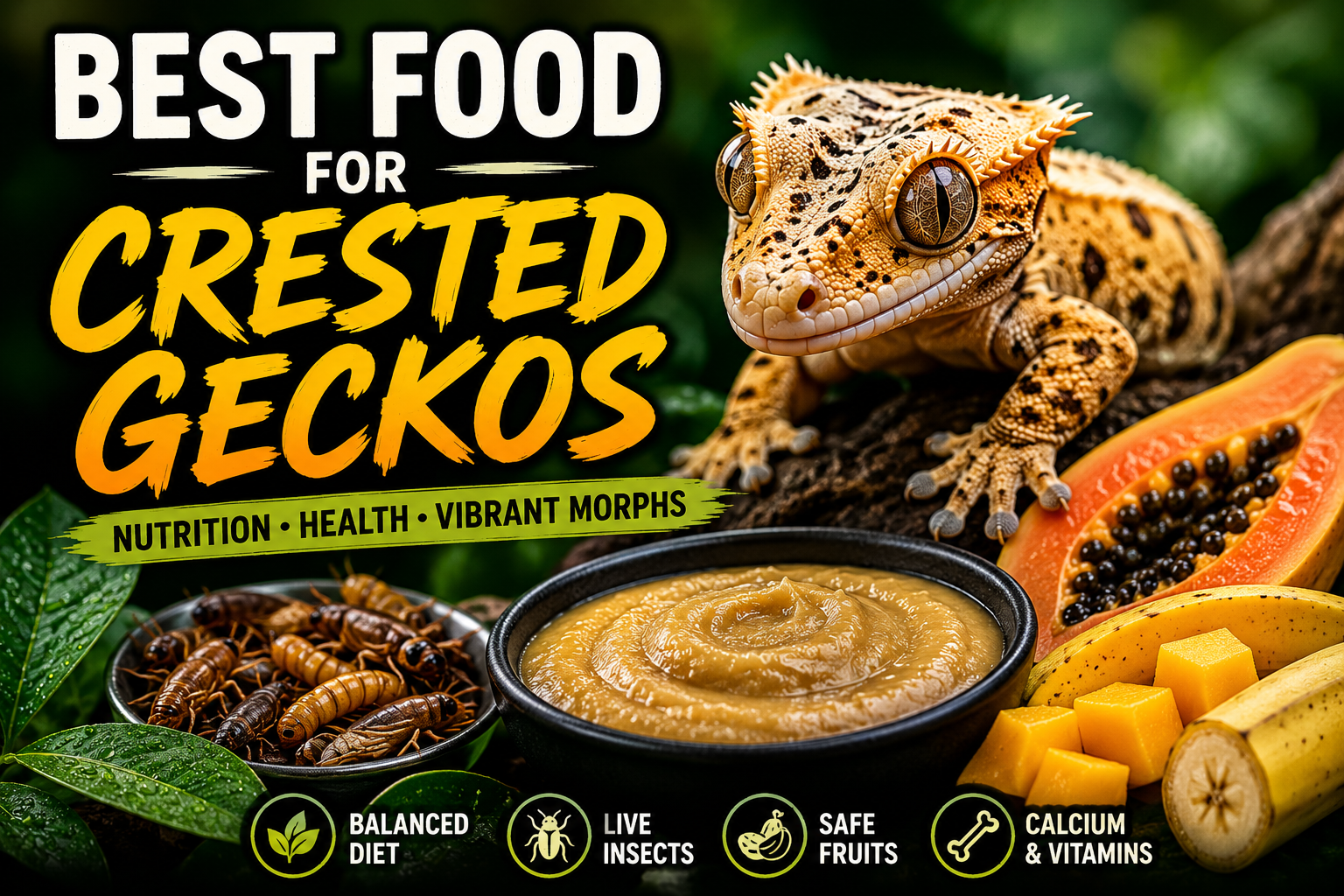
Feeding a crested gecko sounds simple at first.
Until you walk into a pet store, and suddenly you’re staring at:
- Powdered diets
- Insects
- Calcium supplements
- Fruit mixes
- Vitamin sprays
- “Complete nutrition” labels
And about 47 conflicting opinions online.
One breeder says feed insects daily.
Another says insects barely matter.
One keeper swears by bananas.
Another says fruit is dangerous.
So what’s the truth?
Here it is:
Crested geckos thrive when their diet closely matches what nature intended:
- Balanced nutrition
- Moderate protein
- Fruit-based energy
- Proper calcium
- Occasional live prey
- Consistent feeding routines
And if you get nutrition right?
Everything improves:
- Growth
- Color
- Activity
- Shedding
- Breeding performance
- Lifespan
This guide will walk you through the best food for crested geckos in a clear, beginner-friendly way — without the confusion, myths, or outdated advice.
What Do Crested Geckos Eat in the Wild?
Crested geckos are native to New Caledonia, a tropical island environment filled with:
- Fruit
- Nectar
- Soft insects
- Tiny invertebrates
In the wild, they are opportunistic omnivores.
That means they eat a combination of:
- Fruit matter
- Protein sources
- Sugary plant material
- Insects
This is important because many beginners assume crested geckos are either:
- Strict insect eaters
OR
- Strict fruit eaters
Neither is true.
Healthy nutrition requires balance.
Understanding this natural diet helps explain why modern commercial diets work so effectively.
If you’re new to morph care, read Crested Gecko Morphs: The Complete Guide (2026) first.
The Foundation of a Healthy Crested Gecko Diet
Why Balance Matters More Than Variety
A healthy crested gecko diet should provide:
- Protein
- Calcium
- Vitamins
- Carbohydrates
- Hydration
The goal is nutritional completeness.
Not random variety.
Many beginners accidentally create nutritional imbalances by constantly experimenting with foods that sound “natural” but lack proper nutrients.
Consistency matters more than novelty.
A stable, complete diet almost always produces healthier geckos than a constantly changing menu.
Why Commercial Crested Gecko Diets Work So Well
Are Powdered Diets Enough?
High-quality powdered crested gecko diets are considered the gold standard today.
And honestly?
Modern formulas are incredibly effective.
These diets are specifically designed to replicate the nutritional balance crested geckos need.
A good commercial diet includes:
- Fruit-based carbohydrates
- Protein sources
- Added calcium
- Vitamins
- Trace minerals
When mixed with water, the formula becomes easy to digest and highly nutritious.
For most pet crested geckos, a quality powdered diet can serve as the primary food source.
That’s one reason these diets revolutionized gecko keeping.
Before they existed, nutritional deficiencies were MUCH more common.
Should You Feed Live Insects?
Best Insects for Crested Geckos
Yes — insects can absolutely benefit crested geckos.
Especially:
- Juveniles
- Breeding females
- Active adults
Live insects provide:
- Enrichment
- Additional protein
- Hunting stimulation
- Muscle development
Good feeder insects include:
- Crickets
- Dubia roaches
- Black soldier fly larvae
However…
Insects should complement the diet.
Not replace it.
Many beginners overfeed insects and underfeed balanced nutrition.
That can create:
- Obesity
- Nutritional imbalance
- Calcium deficiencies
A balanced approach works best.
For breeding-focused nutrition strategies, visit Crested Gecko Morph Care: Feeding for Color & Growth Optimization.
Best Fruits for Crested Geckos
Can Crested Geckos Eat Bananas?
Yes — but only occasionally.
Crested geckos can safely enjoy small amounts of soft fruit such as:
- Banana
- Mango
- Papaya
- Peach
- Fig
However, fruit should be treated like a supplement…
…not the core diet.
Fresh fruit lacks the balanced calcium-to-phosphorus ratio crested geckos require long term.
Too much fruit can contribute to:
- Nutritional imbalance
- Digestive problems
- Weight gain
Small occasional servings are fine.
Daily fruit feeding is not ideal.
Foods Crested Geckos Should NEVER Eat
Why Some Foods Cause Health Problems
Some foods can seriously harm crested geckos.
Avoid feeding:
- Citrus fruits
- Avocado
- Onions
- Garlic
- Dairy products
- Processed human foods
- Wild-caught insects exposed to pesticides
These foods can:
- Disrupt digestion
- Cause toxicity
- Trigger illness
- Create long-term health damage
Wild insects are especially risky because they may carry:
- Parasites
- Chemicals
- Diseases
Captive-bred feeder insects are far safer.
Feeding Baby vs Adult Crested Geckos
How Often Should You Feed?
Baby crested geckos grow rapidly.
That means they need:
- Frequent feeding
- Easy food access
- Stable nutrition
Juveniles are often fed daily or nearly daily.
Adults typically thrive with feeding every other day.
The exact schedule depends on:
- Age
- Activity level
- Breeding condition
- Body weight
Overfeeding can become a problem with sedentary adults.
Especially in oversized enclosures with minimal exercise.
If you’re building proper enclosures, read Best Tanks for Crested Gecko Morphs.
Calcium, Vitamins, and Supplementation
Calcium is one of the most important nutrients for crested geckos.
Without enough calcium, geckos can develop serious health issues including:
- Weak bones
- Deformities
- Metabolic bone disease
- Muscle weakness
This is why balanced commercial diets are so valuable.
They simplify supplementation dramatically.
If feeding live insects regularly, many keepers dust insects lightly with calcium powder before feeding.
Vitamin balance also matters.
Too little supplementation causes deficiencies.
Too much supplementation can ALSO create problems.
Moderation and consistency are key.
Common Feeding Mistakes Beginners Make
One of the biggest mistakes beginners make is assuming more food equals better health.
It doesn’t.
Overfeeding often creates overweight geckos with poor activity levels.
Another common mistake is relying entirely on insects while ignoring balanced nutrition.
This can eventually lead to calcium imbalance and vitamin deficiencies.
Some keepers also panic when their gecko skips meals.
But crested geckos naturally fluctuate in appetite based on:
- Temperature
- Humidity
- Shedding cycles
- Breeding season
- Stress
A healthy gecko may occasionally eat less without it being an emergency.
Understanding normal behavior prevents unnecessary panic.
For deeper health guidance, read Crested Gecko Morph Health Mastery.
How Diet Affects Color, Growth, and Health
A crested gecko’s diet does far more than satisfy hunger — it directly impacts coloration, growth rate, energy levels, and long-term health. The right balance of nutrients can enhance vibrant morph patterns, support healthy shedding and bone development, and help your gecko thrive from hatchling to adulthood.
Nutrition directly impacts:
- Color vibrancy
- Growth rate
- Muscle development
- Immune strength
- Reproductive success
Poor diets often produce:
- Dull coloration
- Weak growth
- Lethargy
- Bad sheds
- Low breeding performance
Meanwhile, properly nourished geckos tend to:
- Grow steadily
- Display stronger colors
- Maintain healthy body weight
- Recover better from stress
This becomes especially important with expensive morphs.
Because high-end genetics deserve high-end care.
Final Thoughts on Feeding Crested Geckos
Feeding crested geckos doesn’t need to feel complicated.
The best approach is surprisingly simple:
- Use a high-quality commercial diet
- Offer occasional insects
- Use fruit sparingly
- Maintain proper supplementation
- Stay consistent
That consistency creates healthier geckos over the long term.
And healthy geckos are:
- More active
- More colorful
- Easier to breed
- More resilient
- More enjoyable to keep
At the end of the day…
Great nutrition is one of the most important investments you can make in your crested gecko’s future.
Because every incredible morph starts with excellent care.