Top Mistakes When Buying a Crested Gecko Morph
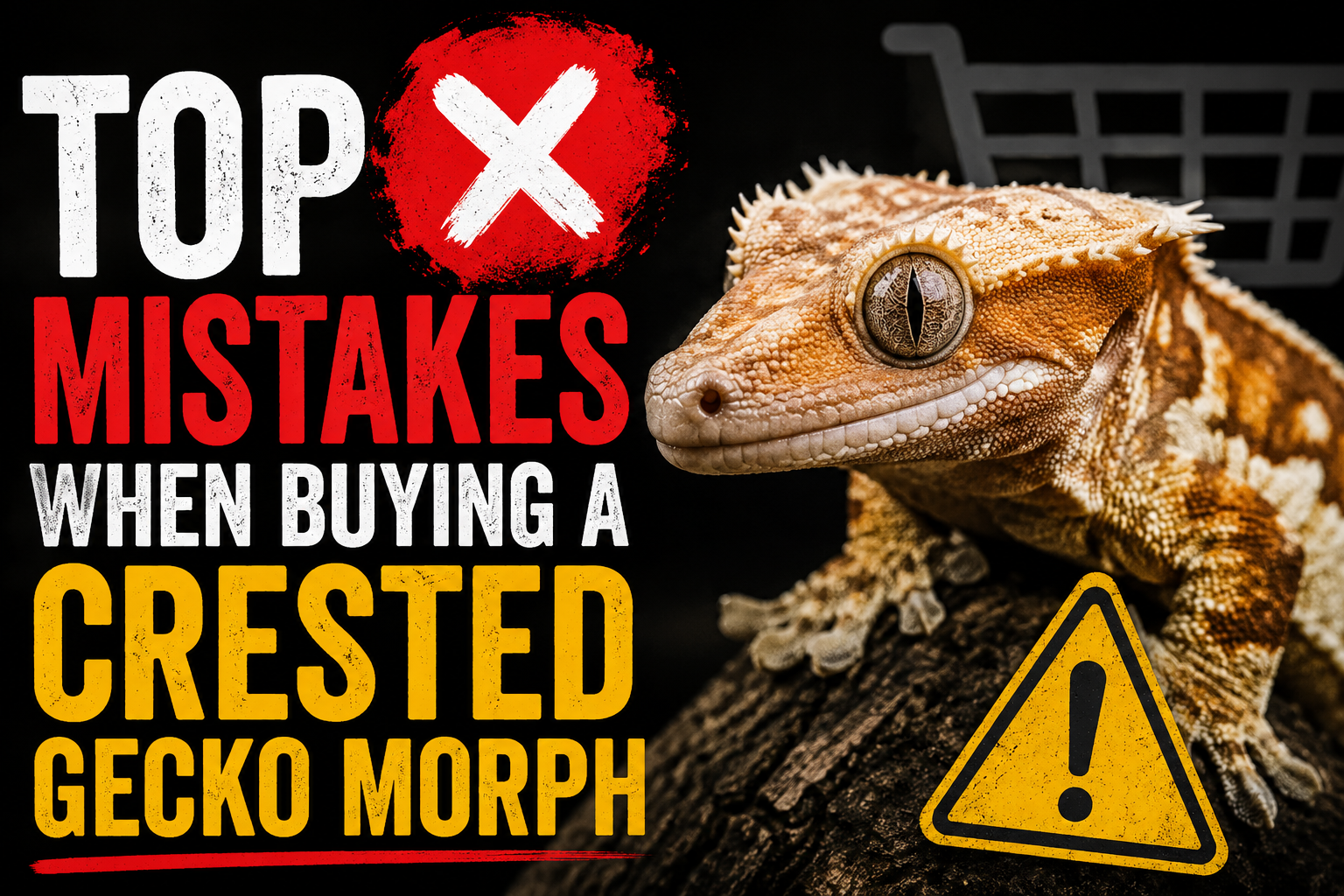
Buying a Crested Gecko morph can be exciting, especially when you first discover the incredible variety of colors, patterns, and genetics available in the hobby. From Lilly Whites to Dalmatians and Harlequins, it’s easy to get caught up in the visual appeal of rare morphs.
But many beginners make costly mistakes when choosing their first gecko — mistakes that can lead to health problems, overpaying, disappointment, or even heartbreak.
The good news is that most of these problems are completely avoidable with the right knowledge. In this guide, we’ll cover the most common mistakes people make when buying a crested gecko morph and how to avoid them.
Before diving deeper, consider reading our article on Crested Gecko Morphs: The Complete Guide (2026) to understand the basics of morph genetics and terminology.
Buying Based on Appearance Alone
One of the biggest mistakes beginners make is choosing a gecko purely because it looks cool. A bright color or rare pattern may grab your attention, but appearance alone should never be the deciding factor.
A healthy gecko with a common morph is far better than an unhealthy gecko with expensive genetics. Many buyers ignore body condition, activity level, weight, and overall health because they become obsessed with rare traits.
When evaluating a crested gecko, pay attention to:
- Clear eyes
- Healthy skin
- Strong grip strength
- Proper body weight
- Straight spine and tail
- Active behavior
A gecko can look beautiful in photos while secretly suffering from poor husbandry or nutritional issues.
Not Researching the Morph Properly
Another major mistake is buying a morph without understanding its genetics or traits. Many new keepers hear fancy names like “Extreme Harlequin” or “Full Pinstripe” and assume every gecko with that label is extremely valuable.
In reality, morph pricing depends on lineage, quality, structure, coloration, and breeder reputation.
Some morphs also come with specific considerations. For example, certain highly sought-after morphs may have more delicate care requirements or higher price volatility in the market.
Understanding the morph beforehand helps you avoid overpaying and teaches you what to realistically expect as the gecko matures. Juvenile geckos can change dramatically in color and pattern as they grow.
Good financial research into morphs can be found here:
Buying From an Unreliable Breeder
Where you buy your gecko matters just as much as what you buy. Unfortunately, some sellers prioritize profits over animal health.
Unethical breeders may:
- Mislabel morphs
- Sell unhealthy geckos
- Breed too aggressively
- Provide inaccurate lineage information
- House animals in poor conditions
A reputable breeder should willingly answer questions, provide photos of parents if available, explain feeding routines, and discuss genetics openly.
Take time to research reviews, social media presence, and customer experiences before purchasing. A trustworthy breeder usually cares deeply about the long-term success of their animals.
If possible, buy from breeders who specialize in Crested Gecko morphs rather than general reptile resellers.
If you want to know how to breed morphs properly, take a look at the following guide:
Ignoring the Gecko’s Age and Size
Many buyers assume younger geckos are always better because they’re cheaper. While juvenile geckos can be affordable, they are also less predictable.
Baby geckos often:
- Change color as they mature
- Develop new patterns later
- Lose certain visual traits over time
This means the gecko you buy may look very different as an adult.
Additionally, younger geckos can be more fragile and sensitive to husbandry mistakes. First-time owners sometimes do better starting with a healthy subadult or adult gecko because they are generally hardier and easier to handle.
Understanding growth stages can prevent unrealistic expectations.
Falling for Edited Photos
Photo editing is surprisingly common in the reptile hobby. Oversaturated lighting, filters, and editing apps can make morphs appear far more vibrant than they really are.
Professional photography itself isn’t bad, but buyers should be cautious when every image looks unrealistically bright or heavily enhanced.
Ask sellers for:
- Natural lighting photos
- Videos
- Multiple angles
- Pictures taken on different days
A reputable breeder usually won’t hesitate to provide honest visuals.
It’s important to remember that many crested geckos also “fire up” and “fire down,” meaning their colors naturally change depending on mood, humidity, temperature, and activity levels.
- Learn more about firing up and down here: Firing Up vs Firing Down Explained
Underestimating the Total Cost
Many people focus only on the purchase price of the morph itself. But owning a crested gecko involves much more than buying the animal.
You’ll also need:
- A proper enclosure
- Climbing branches and plants
- Substrate
- Hygrometers and thermometers
- Feeding supplies
- Quality diet
- Veterinary care
Rare morphs can sometimes cost hundreds or even thousands of dollars, so it makes little sense to cut corners on habitat quality afterward.
New owners should budget for the complete setup before purchasing the gecko.
Here are some helpful articles on habitat quality for your crested gecko:
Rushing Into a Purchase
Impulse buying is one of the most common mistakes in the reptile world. People see a rare morph online and immediately send payment before doing research.
This often leads to regret later.
Take your time comparing breeders, learning morph terminology, and understanding pricing trends. The crested gecko market changes constantly, and patience usually pays off.
A good rule is to spend several days researching before committing to any expensive morph purchase.
The more informed you are, the more confident your decision will be.
Final Thoughts
Buying a Crested Gecko morph should be exciting, not stressful. By avoiding common mistakes like buying based only on looks, ignoring breeder reputation, or rushing into purchases, you dramatically increase your chances of owning a healthy and rewarding pet.
The best crested gecko owners are educated owners. Take time to research morphs, understand genetics, invest in proper care, and purchase from ethical breeders.
In the long run, knowledge will save you far more money —
and frustration — than chasing the rarest morph on impulse.