Why Is My Crested Gecko Turning White?
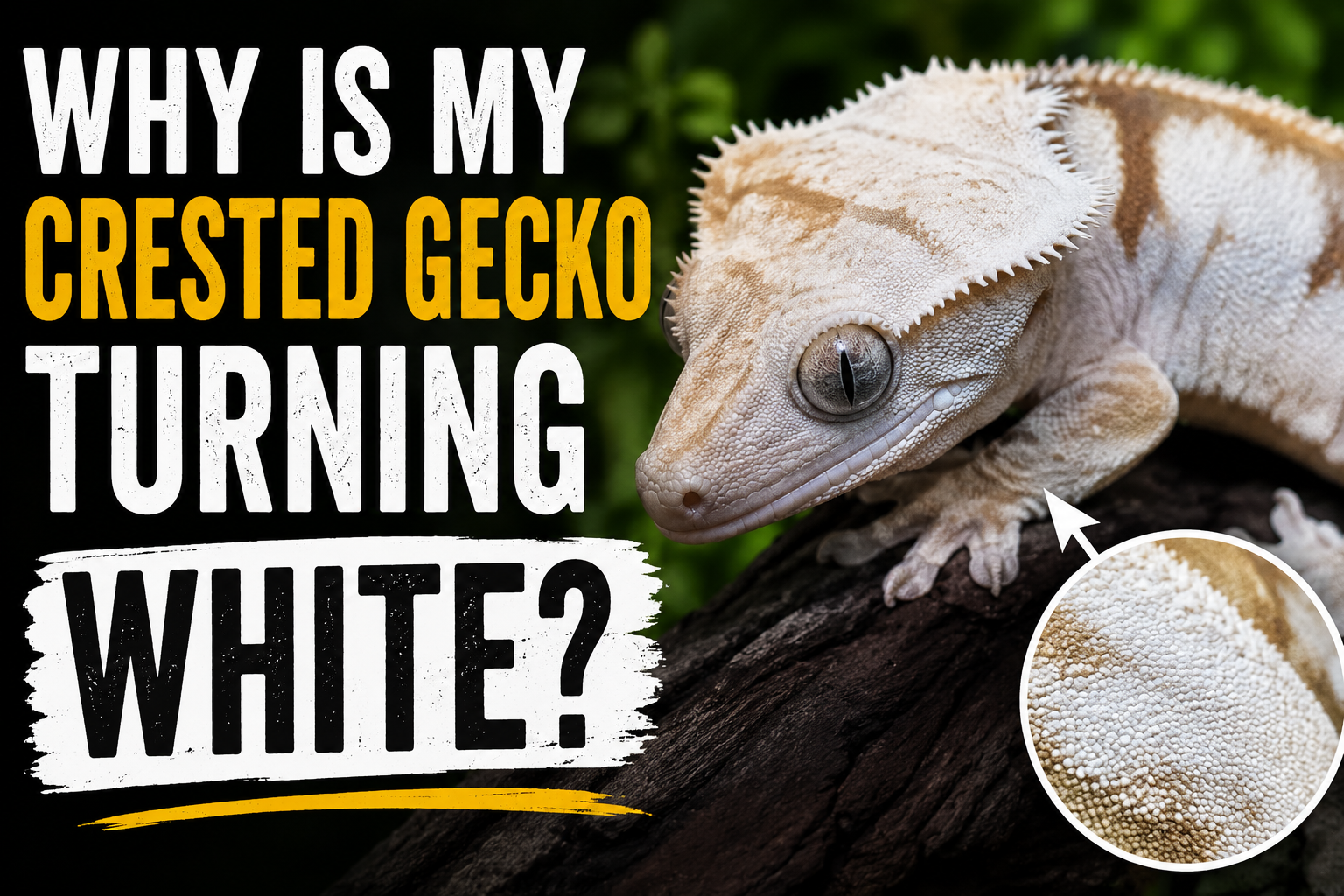
If your crested gecko suddenly looks pale, chalky, or almost ghost-white, don’t panic. In most cases, a crested gecko turning white is completely normal and usually connected to shedding or natural color changes. However, there are also situations where whitening can point to stress, dehydration, poor humidity, or health problems.
Understanding the difference between normal whitening and signs of trouble is one of the most important parts of proper crested gecko care.
If you’re new to the hobby, you may also want to read this guide on Crested Gecko Morphs: The Complete Guide (2026) to better understand how different morphs naturally display color changes.
The Most Common Reason: Shedding
The number one reason a crested gecko turns white is because it is preparing to shed its skin.
Before shedding, crested geckos often develop a dull, pale appearance. Their vibrant colors fade, and the skin may look dusty or grayish-white. This happens because a fresh layer of skin forms underneath the old one.
The whitening stage usually lasts between 12 and 48 hours before the gecko begins shedding.
Young crested geckos shed more frequently because they grow rapidly. Juveniles may shed every couple of weeks, while adults often shed once every month or two.
During this time, you may notice:
- Cloudy or faded coloration
- Reduced activity
- Hiding more than usual
- Slightly dry-looking skin
- Appetite changes
Once the shed is complete, your gecko’s colors usually become brighter and more vibrant again.
What Healthy Shedding Looks Like
A healthy crested gecko will usually remove its shed skin in one piece or in large sections. In many cases, they even eat the shed afterward. This behavior is completely normal and helps them recycle nutrients while avoiding attracting predators in the wild.
The process generally happens overnight, so many owners never actually witness it.
After a successful shed, your gecko should look:
- Cleaner
- Brighter in color
- More active
- Smooth-skinned
If your gecko turns white briefly and then returns to normal within a day or two, shedding is almost certainly the cause.
Humidity Problems Can Cause Whitening
Improper humidity is another major reason a crested gecko may appear pale or white.
Crested geckos require moderate-to-high humidity levels, generally between 60% and 80%. If the enclosure becomes too dry, the skin can lose moisture and develop a flaky or ashy appearance.
Low humidity can also lead to stuck shed, where patches of old skin remain attached to the body. This commonly happens around:
- Toes
- Tail tip
- Head crest
- Eyes
Stuck shed often appears white or papery.
If left untreated, it can restrict circulation and eventually damage the affected area.
To prevent this problem:
- Mist the enclosure regularly
- Use a reliable hygrometer
- Include moisture-retaining substrate
- Provide plenty of foliage and hiding spots
View these articles that can help with tanki enclosures and setups:
“Firing Up” and “Firing Down”
Crested geckos naturally change color throughout the day. This is called “firing up” and “firing down.”
When fired up, the gecko’s colors become darker, richer, and more intense. When fired down, the colors appear lighter, muted, or pale.
A fired-down gecko can sometimes look almost white depending on its morph.
Factors that influence these color shifts include:
- Temperature
- Stress
- Lighting
- Activity level
- Humidity
- Sleep cycles
This is especially noticeable in morphs like:
- Flame morphs
- Harlequins
- Bi-colors
- Lily Whites
- Pinstripes
For example, a pale cream-colored gecko may appear dramatically whiter when fired down during the daytime.
- Learn more about firing up or down here: Fired Up vs Fired Down Explained
Stress Can Affect Coloration
Stress is another possible reason your crested gecko is turning pale.
A stressed gecko may lose coloration temporarily and develop a washed-out appearance. Stress can come from several environmental issues, including:
- Excessive handling
- Loud environments
- Improper temperatures
- Small enclosures
- Aggressive tank mates
- Lack of hiding places
Newly purchased geckos commonly experience stress-related color fading while adjusting to a new home.
Signs of stress may include:
- Jumpiness
- Refusing food
- Hiding constantly
- Tail twitching
- Weight loss
If stress is the cause, improving the enclosure setup and minimizing handling usually helps restore normal coloration.
Could It Be Dehydration?
Dehydration can sometimes make a crested gecko appear pale, wrinkled, or unhealthy.
Unlike shedding-related whitening, dehydration often comes with additional symptoms such as:
- Sunken eyes
- Loose skin
- Lethargy
- Poor appetite
- Sticky or retained shed
Crested geckos mainly drink water droplets from leaves and enclosure walls after misting. If the enclosure stays dry for too long, dehydration becomes a serious risk.
Make sure your gecko always has access to fresh water and a properly humidified environment.
For nutritional advice for your crested gecko, view the guide below:
When Whitening May Signal Illness
Although whitening is usually harmless, there are rare cases where it may indicate a medical issue.
Fungal infections, skin infections, or nutritional deficiencies can sometimes cause unusual discoloration or flaky skin.
Warning signs include:
- Persistent white patches
- Open sores
- Redness or swelling
- Loss of appetite
- Rapid weight loss
- Difficulty moving
Metabolic bone disease caused by poor calcium supplementation can also weaken the gecko’s overall health and affect skin quality.
If the whitening does not improve after shedding or proper husbandry adjustments, a reptile veterinarian should evaluate the animal.
How to Keep Your Crested Gecko Healthy
Preventing abnormal whitening starts with proper care.
Maintain enclosure temperatures between 72°F and 78°F, keep humidity stable, and feed a high-quality crested gecko diet supplemented with insects when appropriate.
A healthy setup should include:
- Proper ventilation
- Climbing branches
- Live or artificial plants
- Humidity control
- Regular cleaning
- Adequate hiding spots
Consistent husbandry greatly reduces shedding complications, stress, and skin problems.
- Keeping your crested gecko healthy can be made easy with this guide: Crested Gecko Morph Health Guide
Final Thoughts
In most situations, a crested gecko turning white is perfectly normal and simply means the gecko is preparing to shed or is currently fired down. However, issues like poor humidity, dehydration, stress, or illness can also contribute to pale coloration.
The key is to observe your gecko’s overall behavior and environment. A healthy gecko that eats well, sheds properly, and remains active is usually nothing to worry about.
By understanding natural color changes and maintaining proper husbandry, you can
keep your crested gecko healthy, vibrant, and thriving for years to come.