Why Isn’t My Crested Gecko Showing Its Morph?
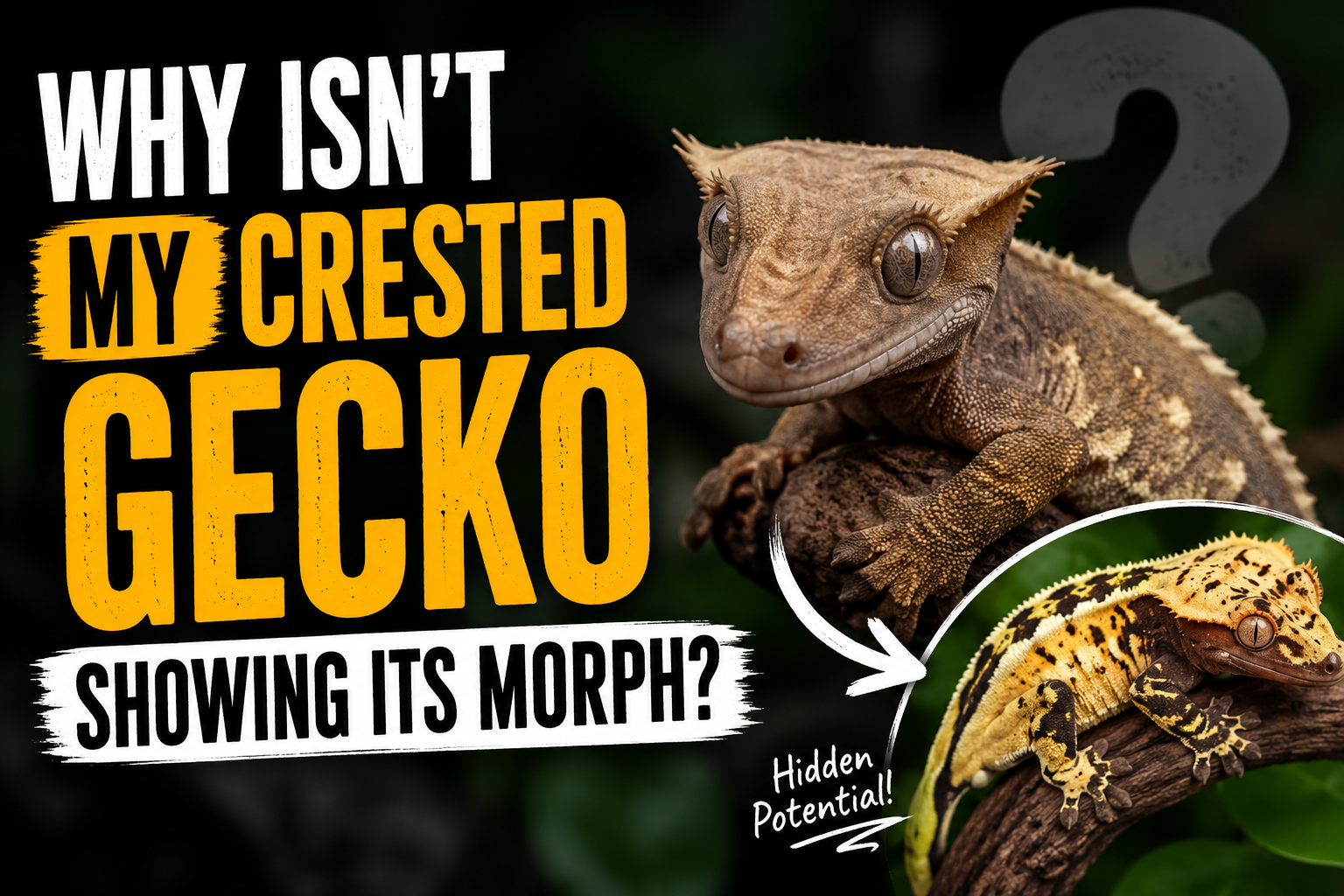
If you recently bought a young Crested Gecko and expected bold patterns, bright colors, or dramatic markings—but instead ended up with a gecko that looks dull or “plain”—you’re not alone. Many new keepers become confused when their crested gecko doesn’t seem to display the morph traits they were promised or expected.
The truth is, crested gecko morphs can change dramatically over time. Genetics, age, stress levels, temperature, shedding cycles, and even lighting all affect how a gecko’s morph appears. Some geckos take months—or even years—to fully develop their coloration and patterning.
In this article, you’ll learn the most common reasons your crested gecko may not be showing its morph and what you can realistically expect as your gecko matures.
Morphs Don’t Always Appear Fully in Baby Crested Geckos
One of the biggest misconceptions in the hobby is that hatchlings will look exactly like they do as adults. In reality, juvenile crested geckos often look very different from their mature form.
A baby pinstripe may only show faint dorsal lines at first. A Dalmatian may hatch with few or no spots. Even a high-end flame or harlequin can appear muted during early growth stages.
As your gecko ages, pigment cells develop and patterns become more visible. This process can happen slowly over several molts.
For example:
- Dalmatian spots often increase with age
- Cream patterns may brighten over time
- Pinstriping can become more defined after several months
- Base colors may darken or intensify with maturity
This is why experienced breeders rarely judge a morph too early.
To learn more about crested gecko morphs, view our complete guide here:
Your Gecko May Not Be “Fired Up”
Crested geckos naturally shift between lighter and darker coloration. This process is called “firing up.”
When fired up, colors become richer, darker, and more vibrant. Patterns also appear more noticeable. When fired down, the gecko can look pale, grayish, or washed out.
Many owners panic because their gecko looks dull during the daytime, only to discover that it becomes stunning at night.
Common reasons a crested gecko fires up include:
- Increased nighttime activity
- Higher humidity
- Feeding time
- Mild excitement or stimulation
- Temperature fluctuations
A gecko that rarely fires up may simply be resting or feeling secure.
Try observing your gecko in the evening under soft lighting. You may notice colors and patterns you’ve never seen before.
Learn more about colors and firing up and down here:
- Fired Up vs Fired Down Explained
- Why Is My Crested Gecko Turning Dark?
- Why Is My Crested Gecko Turning White?
Genetics Play a Bigger Role Than Marketing Photos
Unfortunately, some sellers exaggerate what a baby gecko may eventually become. Just because a hatchling comes from expensive parents does not guarantee it will inherit all of their strongest traits.
Morph inheritance in crested geckos is complex. Unlike simple recessive genetics seen in some reptiles, many crested gecko traits are polygenic. That means multiple genes influence appearance.
A gecko may inherit:
- Weak pinstriping instead of full pinstriping
- Reduced cream coverage
- Minimal spotting
- Faded lateral patterns
- Less vibrant coloration
Even siblings from the same clutch can look dramatically different as adults.
This is especially common with high-end morphs like:
- Lilly White
- Extreme Harlequin
- Quadstripe
- Cappuccino
- Tricolor Harlequin
Some offspring simply express traits more strongly than others.
Stress Can Temporarily Hide Morph Traits
A stressed crested gecko often appears darker, muddier, or less colorful than a relaxed one.
Stress can come from:
- Frequent handling
- Poor enclosure setup
- Incorrect humidity
- Excess heat
- Lack of hiding spots
- Tank mates
- Recent relocation
When stressed, your gecko may suppress bright contrast patterns or remain in a darker fired-up state continuously.
A healthy enclosure should include:
- Plenty of foliage
- Climbing branches
- Stable humidity
- Proper nighttime security
- Minimal disturbances during the day
Once your gecko settles in, its natural colors usually become more apparent.
Shedding Can Make Colors Look Strange
Before shedding, crested geckos often become dull, gray, or cloudy. This can temporarily hide pattern details and make morph traits appear faded.
Many owners mistakenly believe something is wrong with their gecko’s coloration when it is simply preparing to shed.
After shedding, colors often return brighter and cleaner than before.
If your gecko suddenly looks pale or dusty, check for signs of an upcoming shed:
- Reduced activity
- Increased hiding
- Cloudy appearance
- Slightly loose skin texture
Proper humidity is essential during this stage.
Lighting Changes How Morphs Appear
Lighting dramatically affects how morphs look to the human eye.
Under dim household lighting, cream patterns and subtle markings may barely show. Under natural daylight or high-quality LED lighting, the same gecko can appear completely different.
This is why breeder photos sometimes look more vibrant than what you see at home.
Photography also plays a role. Professional breeders often photograph geckos:
- While fully fired up
- Under bright lighting
- Using color-enhancing backgrounds
- With optimized camera settings
Your gecko may still possess the morph traits—you simply aren’t seeing them under ideal conditions.
Some Morph Traits Take Years to Develop
Certain traits strengthen gradually with maturity.
Dalmatian spotting is one of the best examples. Many Dalmatians continue gaining spots throughout adulthood. Likewise, cream coverage in harlequins may spread and intensify over time.
Some geckos don’t truly “peak” until they are 18–24 months old.
Patience is extremely important in the crested gecko hobby. Young geckos are constantly changing.
This is one reason breeders enjoy raising hatchlings into adulthood—the transformation can be dramatic.
Your Gecko May Simply Have a Low Expression Morph
Not every gecko will display bold, high-end traits. Some animals are considered “low expression,” meaning they technically possess a morph but show it less dramatically.
For example:
- A low-expression harlequin may have minimal cream
- A partial pinstripe may show incomplete dorsal lines
- A Dalmatian may only have a few spots
- A flame morph may display weak contrast
This doesn’t mean your gecko is unhealthy or low quality. In fact, many subtle morphs become uniquely beautiful over time.
The crested gecko hobby often focuses heavily on extreme visuals, but even simpler geckos can make outstanding pets.
Final Thoughts
If your crested gecko isn’t showing its morph yet, don’t panic. In many cases, the gecko is simply immature, fired down, stressed, or still developing its adult coloration.
Morph expression is influenced by genetics, environment, age, and overall health. Some geckos transform dramatically over time, while others develop more subtle traits.
The best thing you can do is provide excellent care, maintain proper enclosure conditions, and allow your gecko time to mature naturally.
You may be surprised at how much your crested gecko changes over the next several months.