Does Shedding Change Crested Gecko Color?
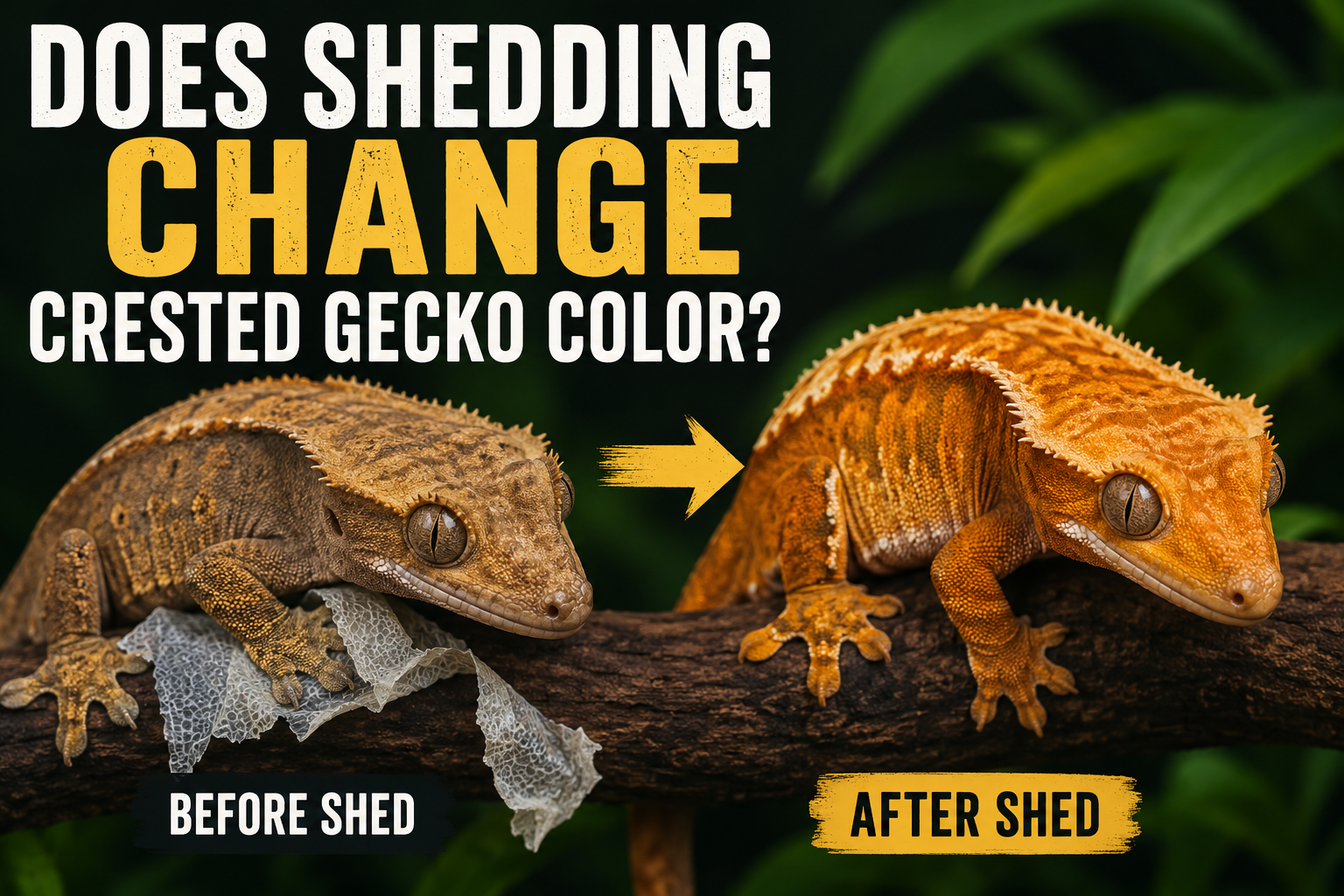
If you’ve ever looked at your crested gecko before and after a shed, you may have noticed something surprising: the colors seem different.
A gecko that looked dull and gray one day may suddenly appear brighter, richer, or more vibrant the next. This often leads owners to ask an important question — does shedding actually change a gecko’s color?
The short answer is yes, but usually only temporarily. Shedding plays a major role in how a crested gecko’s colors appear, and understanding the process can help you better monitor your gecko’s health, hydration, and overall condition.
For new keepers especially, color changes during shedding can sometimes look alarming. Fortunately, most of these shifts are completely normal and are simply part of the reptile shedding cycle.
If you are new to gecko ownership, consider reading this article all about crested gecko morphs: Crested Gecko Morphs: The Complete Guide.
Why Crested Geckos Shed
Like all reptiles, crested geckos periodically shed their skin as they grow. Old skin becomes worn out and is replaced with a fresh new layer underneath. Younger geckos shed far more frequently because they grow rapidly, while adults may only shed every few weeks.
Before shedding begins, many geckos display noticeable changes in appearance. Their skin often becomes pale, dusty, or muted. Some owners mistakenly think their gecko is sick because the colors suddenly look faded.
In reality, this dull appearance is caused by the old layer of skin separating from the fresh layer beneath it. Once the shed is complete, the newer skin is exposed, and the gecko’s natural colors typically appear much brighter.
You may want to read this article on Why Is My Crested Gecko Turning White? since many owners confuse pre-shed coloration with illness.
The “Fired Up” Effect and Shedding
Crested geckos are famous for their ability to change color intensity through a process commonly called “firing up.” When fired up, a gecko’s colors become darker, richer, and more vivid. When fired down, colors appear softer and lighter.
Shedding can temporarily affect this process.
Before shedding, geckos often appear heavily fired down because the old skin layer dulls the underlying pigments. After the shed comes off, the colors may look dramatically enhanced. This can make patterns seem sharper and morph traits more noticeable.
For example:
- Flame morphs may display stronger cream contrast.
- Harlequins may show more pronounced side patterning.
- Dalmatian spots may appear darker and clearer.
- Pinstripes can look cleaner and brighter.
Many owners incorrectly assume their gecko permanently changed color after a shed. In most cases, the gecko simply returned to its normal coloration once the dead skin was removed.
Learn more about firing up and down and morph display here:
Does Shedding Permanently Change Color?
Usually, no. Shedding itself does not permanently alter a gecko’s genetics or morph traits. However, it can reveal natural color development that becomes more noticeable over time.
Young crested geckos often change appearance as they mature. Each shed may gradually reveal deeper pigmentation, stronger patterning, or increased contrast. This is especially common in morphs like:
- Lilly White
- Extreme Harlequin
- Tricolor
- Quadstripe
- Tiger
- Halloween morphs
Because growth and shedding happen together, many keepers mistakenly think the shed caused the permanent color change. In reality, the gecko was genetically programmed to develop those colors as it matured.
Learn more about morph traits, genetics, and color change here:
Why Some Geckos Look Brighter After Shedding
Fresh skin reflects light differently than old skin. Once the old layer is removed, the new scales underneath appear smoother, cleaner, and healthier. This creates the illusion of enhanced color saturation.
Hydration also plays a major role.
Geckos that shed successfully are usually properly hydrated, and healthy hydration helps support vibrant coloration. A dehydrated gecko may continue to look dull even after shedding.
Humidity, diet, stress levels, and lighting conditions can all influence how dramatic the color difference appears.
Some owners notice that their gecko becomes especially vibrant at night after shedding. This is because crested geckos are nocturnal and tend to fire up during periods of activity.
Learn more about how feeding affect coloration here:
When Color Changes Could Signal a Problem
While shedding-related color changes are usually normal, there are situations where unusual coloration may indicate health issues.
Watch for symptoms like:
- Persistent gray or pale skin long after shedding
- Patchy retained shed
- Dark black discoloration
- Red irritated areas
- Sudden weight loss
- Lethargy
Retained shed around toes and tails is especially common in poorly humidified enclosures. Over time, stuck shed can restrict circulation and lead to serious complications.
If a gecko’s colors remain abnormally dull for extended periods, it may point to dehydration, stress, nutritional deficiencies, or illness.
Learn more about taking care of your morph's health here:
Do Certain Morphs Change More Dramatically During Shedding?
Absolutely. Some morphs naturally display more dramatic visual shifts than others.
Highly patterned morphs often show the biggest contrast between pre-shed and post-shed appearances. Harlequins and tricolors, for example, may appear almost “washed out” before shedding and then become extremely bold afterward.
Dark-based morphs like Halloween geckos may look especially intense after a fresh shed because the black pigments appear cleaner and more defined.
Lighter morphs such as Lilly Whites sometimes show subtle cream enhancement after shedding, making their patterns appear brighter and crisper.
This is why breeders often wait until after a shed cycle to photograph geckos for sales listings. Freshly shed geckos usually display their best possible coloration.
Learn more about the different characteristics of morphs here:
Final Thoughts
Shedding absolutely affects how a crested gecko’s color appears, but in most cases, the changes are temporary and completely natural.
Before shedding, colors often become dull, faded, or grayish due to the old skin layer separating from the body. After shedding, the fresh skin underneath reveals brighter, cleaner, and more vibrant coloration.
For many keepers, this transformation is one of the most fascinating aspects of owning crested geckos. Watching a morph “come alive” after a successful shed can help you better appreciate the unique genetics and beauty of these reptiles.
As long as your gecko is shedding properly, staying hydrated, eating well, and behaving normally, temporary color shifts during shedding are usually
nothing to worry about.