Lilly White Crested Gecko Morphs: Genetics, Appearance, and Care
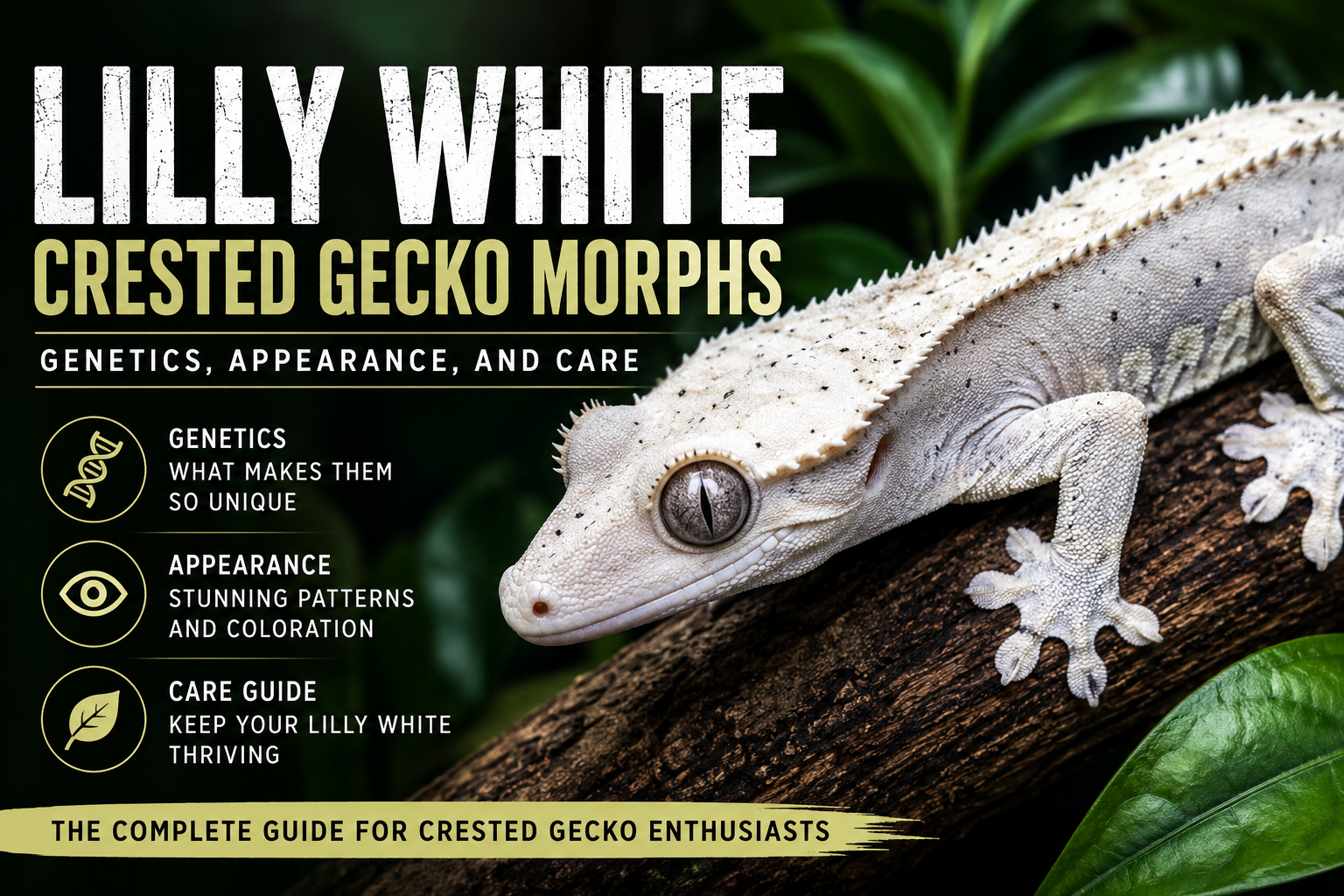
The Crested Gecko hobby has produced many beautiful morphs over the years, but few are as recognizable or sought-after as the Lilly White morph. Known for its dramatic cream and white coloration, silver eyes, and striking contrast, the Lilly White has become one of the premium morphs in modern crested gecko breeding.
Whether you are a beginner researching your first gecko or an experienced keeper exploring advanced genetics, understanding the Lilly White morph can help you make better decisions about care, breeding, and long-term ownership.
The Lilly White morph first gained attention because of its unusually high white pattern coverage. Unlike standard harlequin or pinstripe geckos, Lilly Whites often display large patches of creamy white along the sides, dorsal area, and tail.
Some individuals appear almost completely white when fired up. The morph originated from a genetic mutation discovered and developed by breeders, and it quickly became one of the most valuable traits in the hobby.
One reason the morph became so popular is because no two Lilly Whites look exactly alike. Some have soft cream highlights, while others display intense white walls and dramatic pattern contrast. Many breeders combine the morph with other traits such as harlequin, pinstripe, tiger, or dalmatian to create unique designer geckos.
- New to morphs? Read our Complete Guide to Crested Gecko Morphs.
What Makes a Lilly White Different?
The most defining feature of a Lilly White is the amount of white patterning visible across the body. Most standard crested geckos display creams, oranges, reds, browns, or yellows. Lilly Whites intensify this appearance by replacing large portions of the normal coloration with bright cream or white pigmentation.
Common physical characteristics include:
- Thick white side patterning
- Bright dorsal coloration
- White or cream tail coverage
- Silvery-gray eyes
- Strong contrast when fired up
Many Lilly Whites also develop more white coloration as they mature. Hatchlings may begin with moderate cream markings before becoming dramatically brighter as adults.
The morph can appear in many color bases, including red, orange, yellow, and dark chocolate tones. This makes the Lilly White morph especially attractive for selective breeding projects.
- Learn more about firing colors here: Fired Up vs Fired Down Explained
Lilly White Genetics Explained
The Lilly White trait is widely understood in the reptile community as an incomplete dominant genetic trait. This means only one parent needs to carry the gene for some offspring to visually display the morph.
In many pairings, breeders expect approximately 50% of the offspring to hatch as Lilly Whites when one parent carries the gene. However, breeding two Lilly Whites together is considered unethical and dangerous because the homozygous form of the gene is believed to be lethal to embryos.
Because of this, responsible breeders pair Lilly Whites with non-Lilly morphs to safely continue projects. This has led to a huge variety of combinations, including:
- Lilly White Harlequins
- Lilly White Pinstripes
- Axanthic Lilly Whites
- Dalmatian Lilly Whites
- Extreme Harlequin Lilly Whites
The genetics behind these combinations continue to evolve as breeders experiment with new projects and bloodlines.
- Learn more about How Morph Traits Are Passed Down in Crested Geckos.
- Learn more about genetics here: Crested Gecko Morph Genetics
Housing and Care Requirements
One of the best things about the Lilly White morph is that care requirements are essentially the same as other crested geckos. The morph does not require special handling, lighting, or feeding protocols beyond standard husbandry practices.
Adult Lilly Whites thrive in vertical enclosures that provide climbing space, foliage, and hiding spots. A commonly recommended minimum enclosure size for adults is 18x18x24 inches, though larger setups are always beneficial.
Ideal conditions include:
- Temperatures between 72–78°F
- Humidity between 60–80%
- Daily misting cycles
- Plenty of climbing branches and plants
- Moderate airflow and ventilation
Because crested geckos are arboreal, vertical space matters more than floor space. Bioactive enclosures have become increasingly popular for Lilly Whites because they help maintain humidity while creating a naturalistic display.
Feeding is simple and beginner-friendly. Most keepers use commercial crested gecko diets supplemented occasionally with live insects such as crickets or roaches. Proper nutrition helps support healthy growth, shedding, and coloration.
- See our guide to Best Tanks for Crested Gecko Morphs.
- Also, see our guide to Crested Gecko Morph Setups.
Temperament and Handling
Lilly Whites generally have the same temperament as standard crested geckos. Most are calm, curious, and relatively easy to handle once acclimated. Juveniles can be jumpy, but adults often become more tolerant of interaction over time.
Handling sessions should remain short and stress-free, especially during the first few weeks after bringing a gecko home. Allowing the gecko to walk from hand to hand instead of grabbing it helps build trust.
Like all crested geckos, Lilly Whites can drop their tails if severely stressed. Fortunately, tailless cresties are common in the hobby and usually live perfectly healthy lives afterward.
Why Lilly Whites Are So Expensive
Lilly White crested geckos are among the most expensive morphs available due to their rarity, visual appeal, and breeding value. Lower-expression Lilly Whites may cost several hundred dollars, while high-end examples with extreme white coverage and premium lineage can sell for thousands.
Several factors influence price:
- Amount of white coverage
- Base color quality
- Pattern structure
- Proven genetics
- Breeder reputation
- Age and sex
Many collectors view top-quality Lilly Whites as centerpiece animals because of their standout appearance.
- Thinking about breeding? Read our Crested Gecko Morph Breeding Blueprint.
Final Thoughts
The Lilly White morph represents one of the most visually stunning achievements in the modern crested gecko hobby. With their bright white patterning, unique genetics, and endless designer combinations, these geckos continue to attract collectors and hobbyists around the world.
Despite their premium appearance, they remain relatively easy to care for, making them suitable for both beginners and experienced keepers alike.
For anyone interested in advanced morph projects, premium breeding lines, or simply owning a beautiful display animal, the Lilly White is easily one of the most exciting crested gecko morphs available today.