Axanthic Crested Gecko Morphs: Genetics, Appearance, and Care
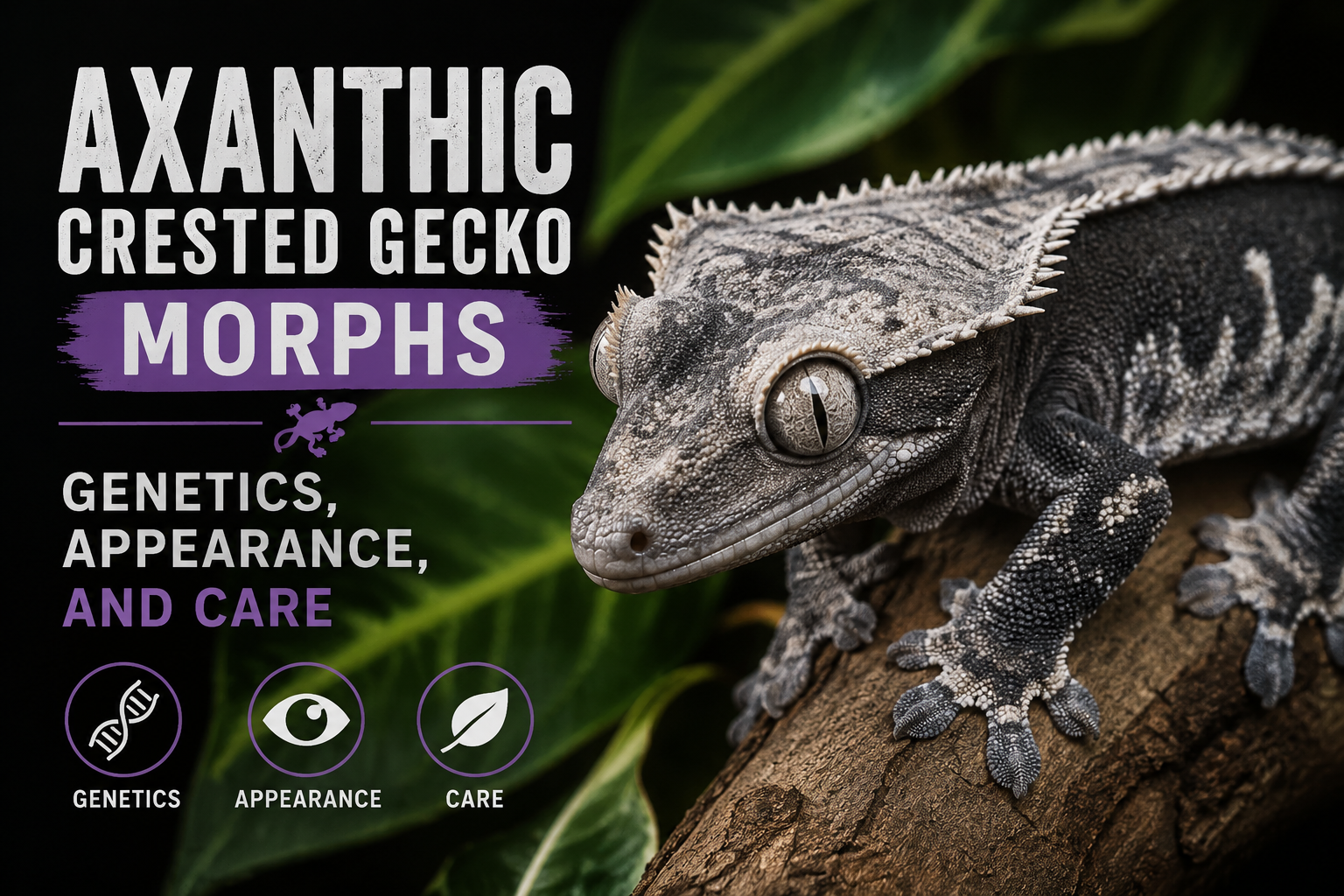
Among the many fascinating varieties of Crested Gecko available today, the Axanthic morph stands out as one of the most visually unique and genetically intriguing.
With its reduced yellow pigmentation and dramatic grayscale appearance, the Axanthic Crested Gecko has quickly become a favorite among collectors, breeders, and reptile enthusiasts who want something truly different from the usual bright orange and red morphs.
In this guide, you’ll learn what makes Axanthic Crested Geckos special, how the genetics work, what to expect as they mature, and how to properly care for them.
What Is an Axanthic Crested Gecko?
The word “axanthic” refers to the reduction or absence of xanthophores, the pigment cells responsible for yellow coloration. In reptiles, this often creates animals with silvery, black, gray, or muted lavender tones instead of the warm yellows and creams seen in standard morphs.
In Crested Gecko breeding, Axanthic morphs are prized because they create an almost monochromatic look. Many display smoky gray bodies, charcoal patterning, and icy white highlights that become even more dramatic as the gecko matures.
Unlike common morphs such as Flame or Harlequin, Axanthic is considered a genetic trait rather than simply a pattern variation. That rarity has made these geckos especially valuable in the reptile hobby.
Learn more about the different kind of gecko morphs here: Crested Gecko Morphs: The Complete Guide (2026)
The Genetics Behind Axanthic Morphs
Axanthic genetics in crested geckos are generally considered recessive. This means a gecko must inherit the Axanthic gene from both parents in order to visually display the trait.
Here’s a simplified breakdown:
- Two visual Axanthics bred together will produce all Axanthic offspring.
- A visual Axanthic bred to a normal gecko will typically produce 100% heterozygous (“het”) offspring.
- Two heterozygous Axanthics may produce visual Axanthics, hets, and normal offspring.
Because the trait is recessive, breeding projects can take years to establish. This is one reason Axanthic Crested Geckos often command high prices compared to more common morphs.
Breeders also experiment with combining Axanthic genetics with other traits like Pinstripe, Lilly White, and Harlequin to create even more visually striking combinations.
Here are some suggested articles to read to learn how their genetics and traits work:
Appearance and Color Development
One of the most interesting aspects of Axanthic Crested Geckos is how their appearance changes over time. Hatchlings may initially appear muted brown or gray, but as they mature, many develop stronger contrast and cleaner monochromatic coloration.
Some Axanthics display:
- Silver-gray base colors
- Smoky black patterning
- White dorsal markings
- Lavender undertones
- Reduced cream coloration
The overall look can vary significantly depending on lineage and additional genetic traits involved.
Many Axanthics also look dramatically different when “fired up.” Like other crested geckos, their coloration intensifies due to mood, temperature, humidity, or activity level. A fired-up Axanthic may show deep charcoal tones and sharp contrast that make the morph especially eye-catching.
Because of their unusual appearance, Axanthics are frequently showcased in high-end breeding collections and reptile expos.
Learn more about firing up and down here:
Are Axanthic Crested Geckos Rare?
Yes, Axanthic Crested Geckos are still considered relatively rare in the reptile market. While more breeders are working with the trait each year, true visual Axanthics remain difficult to produce consistently.
Several factors contribute to their rarity:
- Recessive genetics require careful breeding
- Breeding projects take multiple generations
- Limited original bloodlines exist
- High demand from collectors
Prices can range from several hundred dollars to several thousand depending on lineage, structure, pattern quality, and additional morph combinations.
As the hobby continues to evolve, more Axanthic combinations will likely appear, but they remain one of the more exclusive morph categories today.
Learn more about pricing and where to buy axanthic crested geckos here:
Housing Requirements
Despite their unusual appearance, Axanthic Crested Geckos require the same general care as other Crested Gecko morphs.
A vertical enclosure works best because crested geckos are arboreal climbers. Juveniles can thrive in smaller enclosures, while adults should ideally have at least an 18x18x24 inch habitat.
The enclosure should include:
- Climbing branches
- Cork bark
- Artificial or live plants
- Humidity-retaining substrate
- Hiding spaces
Temperatures should remain between 72°F and 78°F, with nighttime drops being perfectly acceptable. Temperatures above 82°F for prolonged periods can stress crested geckos and become dangerous.
Humidity should fluctuate between 50% and 80%, achieved through daily misting and proper ventilation.
Learn more about housing suggestions here:
Feeding and Nutrition
Axanthic Crested Geckos thrive on the same diet as standard crested geckos. A high-quality commercial crested gecko diet should form the foundation of their nutrition.
Most keepers feed prepared diets several times per week, supplemented occasionally with live insects such as:
- Crickets
- Dubia roaches
- Black soldier fly larvae
Insects should always be gut-loaded and lightly dusted with calcium supplements.
Fresh water should also be available at all times, though many crested geckos prefer drinking water droplets from misted surfaces.
A nutritious diet plays a major role in healthy growth, skin quality, and successful breeding outcomes.
Learn tips for nutrition here:
Temperament and Handling
Axanthic Crested Geckos generally have calm temperaments similar to other morphs. Most become tolerant of gentle handling with regular interaction.
However, younger geckos may be jumpy and quick-moving. Handling sessions should remain short and stress-free, especially during acclimation periods.
Like all crested geckos, Axanthics can drop their tails if startled. Unlike some lizard species, the tail does not regenerate.
Fortunately, tailless “frog butt” crested geckos remain perfectly healthy and are widely accepted within the hobby.
Why Axanthic Morphs Are So Popular
The popularity of Axanthic Crested Geckos comes down to one thing: visual uniqueness. In a hobby filled with bright reds, oranges, and creams, the cool grayscale tones of Axanthics immediately stand apart.
Breeders are also excited about the future possibilities of combining Axanthic genetics with other advanced morph projects. Each new pairing has the potential to create never-before-seen color combinations and patterns.
For collectors who appreciate rare and exotic reptiles, Axanthics represent one of the most exciting developments in modern crested gecko breeding.
Final Thoughts
Axanthic Crested Gecko morphs are among the most fascinating and sought-after reptiles in the crested gecko hobby today. Their reduced yellow pigmentation creates dramatic silver and charcoal coloration that looks unlike almost any other morph currently available.
While they can be expensive and difficult to breed, their beauty and rarity continue to drive strong interest among reptile enthusiasts worldwide.
Whether you’re a beginner researching morphs or an advanced breeder planning future projects, Axanthic Crested Geckos offer a perfect example of how genetics can transform the appearance of these incredible animals.