Lilly White vs Axanthic Crested Gecko Morphs
Among the many fascinating Crested Gecko morphs available today, two of the most visually striking are the Lilly White and the Axanthic. Both morphs are highly sought after by breeders and collectors, but they differ dramatically in appearance, genetics, rarity, and care considerations.
Understanding these differences can help hobbyists choose the right morph for their collection and better appreciate the genetics behind these beautiful reptiles.
If you are new to morph genetics, you may first want to read this article entitled: Crested Gecko Morphs: The Complete Guide (2026), before diving deeper into advanced morph comparisons.
What Is a Lilly White Crested Gecko?
The Lilly White morph is one of the most recognizable and expensive crested gecko morphs in the reptile hobby. It was originally developed through selective breeding and quickly gained popularity due to its bold cream-white coloration and dramatic pattern contrast.
Lilly Whites typically display:
- Thick white or cream patterning
- Bright lateral markings
- Heavy dorsal coverage
- Increased white pigmentation across the body
Many Lilly Whites appear almost “frosted” compared to standard morphs. Their bright coloration often intensifies as they mature, making adult specimens especially eye-catching.
Unlike many basic morphs, the Lilly White trait is considered a dominant genetic trait. This means only one parent needs to carry the gene for offspring to potentially inherit the morph.
One important detail breeders must understand is that breeding two Lilly Whites together is considered lethal. Super Lilly White offspring generally do not survive development. Because of this, ethical breeders pair Lilly Whites only with non-Lilly geckos.
Learn more about Lilly White genetics and traits from the article below:
What Is an Axanthic Crested Gecko?
The Axanthic morph is very different from the Lilly White. Rather than increasing white pigmentation, Axanthic geckos reduce or eliminate yellow and red pigments entirely. This creates a grayscale or monochromatic appearance.
Axanthic crested geckos often display:
- Silver tones
- Black and gray coloration
- Reduced warm pigments
- Smoky or charcoal patterning
The result is a gecko with a cooler, almost metallic appearance that stands out from more colorful morphs.
Axanthic genetics are generally recessive. This means a gecko must inherit the gene from both parents to visually express the trait. A gecko carrying only one copy of the gene is known as “het Axanthic” and will usually appear normal while still carrying the genetic potential to produce Axanthic offspring.
Because recessive projects take multiple generations to establish, Axanthic morphs are often more difficult and time-consuming for breeders to produce consistently.
Appearance Differences
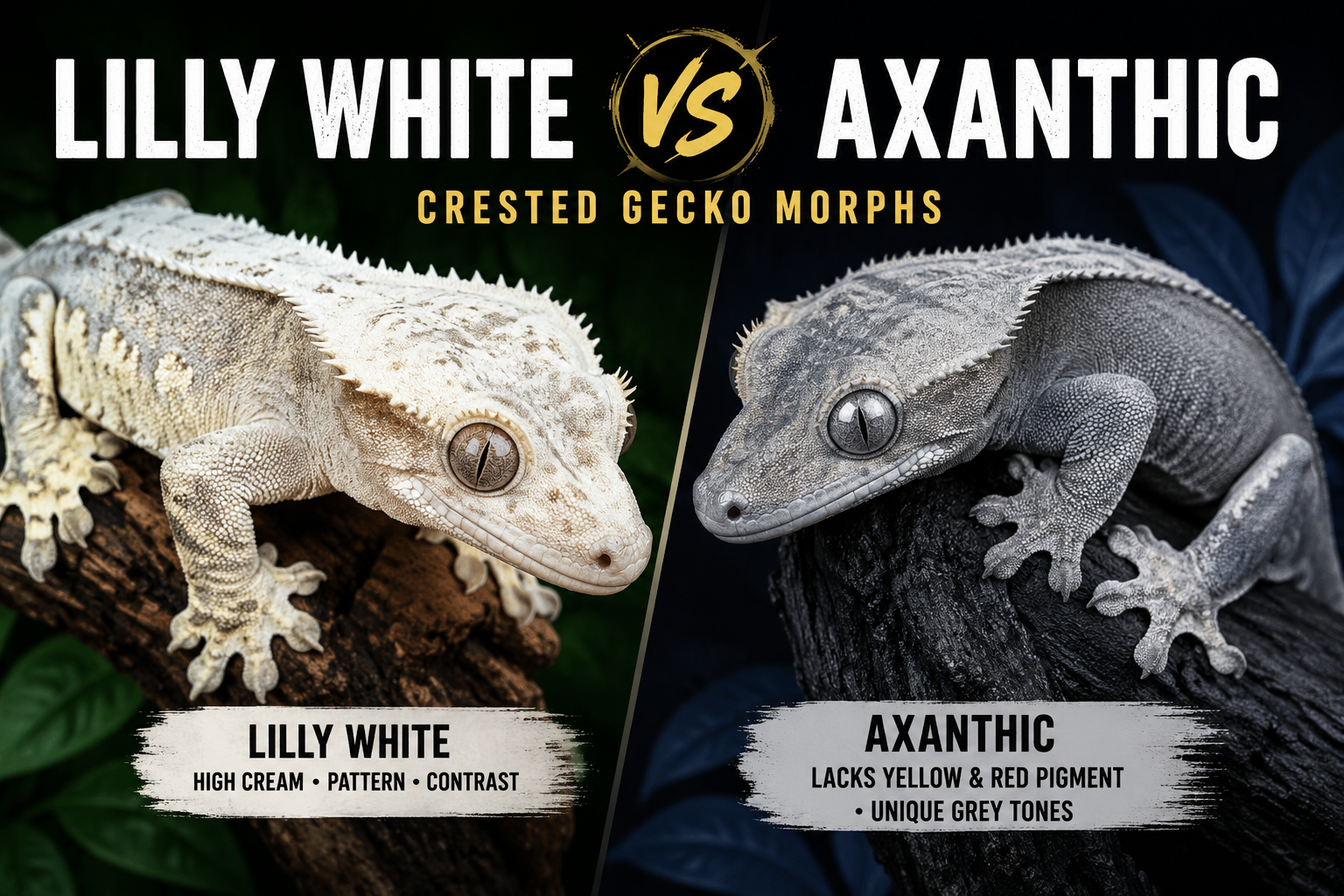
The most obvious difference between Lilly White and Axanthic morphs is coloration.
Lilly Whites are bright, creamy, and highly contrasted. They often have warm tones, including cream, yellow, orange, or soft pink mixed into their patterns. Their high-white appearance gives them a bold and flashy look that instantly attracts attention.
Axanthics, on the other hand, are muted and monochromatic. Their beauty comes from subtle shading, cool grays, and dramatic dark contrasts rather than bright pigmentation.
A simple way to think about it is:
- Lilly White = high brightness and contrast
- Axanthic = grayscale elegance and reduced pigment
Some reptile keepers prefer the loud visual appeal of Lilly Whites, while others appreciate the rare and mysterious appearance of Axanthics.
Identifying both of these geckos can be made easy with the information contained in this article:
Rarity and Price Comparison
Both morphs are considered premium morphs, but Lilly Whites are generally more common in the hobby due to their dominant inheritance pattern.
Lilly Whites have been widely established by breeders worldwide, and prices can range from a few hundred dollars to several thousand depending on lineage, structure, and coloration.
Axanthic crested geckos are typically rarer because recessive breeding projects require more time and planning. Pure visual Axanthics may command higher prices due to limited availability and the complexity involved in producing them.
In many cases:
- Lilly Whites are easier to produce
- Axanthics are harder to establish genetically
- Both remain highly valuable in the reptile market
You will learn more about buying these crested geckos from the helpful links below:
Breeding Considerations
Breeding Lilly White geckos requires careful planning because the super form is lethal. Responsible breeders avoid Lilly White-to-Lilly White pairings entirely.
Axanthic breeding projects require patience instead of avoidance. Since the trait is recessive, breeders often work with heterozygous (“het”) animals for several generations before visual Axanthics appear.
This makes Axanthic projects:
- More time-intensive
- More genetics-focused
- More unpredictable for beginners
Lilly White projects are often considered easier for newer breeders because visual offspring can appear immediately when paired correctly.
However, both morphs benefit from careful record keeping, lineage tracking, and ethical breeding standards. Learn more about how to breed these morphs safely from the guide below:
Care Differences
In terms of basic care, Lilly White and Axanthic crested geckos require nearly identical husbandry. Both thrive in:
- Moderate humidity
- Proper ventilation
- Vertical climbing enclosures
- Balanced crested gecko diets
Neither morph requires specialized feeding or environmental conditions solely because of genetics.
However, some Lilly Whites may display slightly more sensitive skin or eye issues depending on lineage and breeding quality. This makes purchasing from reputable breeders extremely important.
For enclosure and tank setup help, refer to the following articles:
Which Morph Is Better?
There is no universally “better” morph between Lilly White and Axanthic crested geckos. The choice comes down to personal preference and breeding goals.
Choose a Lilly White if you prefer:
- Bright, high-contrast geckos
- Bold white coloration
- Easier breeding projects
- Highly visible patterning
Choose an Axanthic if you prefer:
- Rare recessive genetics
- Dark grayscale aesthetics
- Advanced breeding projects
- Unique monochromatic coloration
Both morphs represent some of the most exciting developments in modern crested gecko breeding and continue to grow in popularity among reptile enthusiasts worldwide.
Whether you are a collector, breeder, or beginner hobbyist, understanding the genetics and visual traits behind these morphs can help you make smarter purchasing and breeding decisions.