Crested Gecko Morph Breeding: A Beginner-Friendly Guide
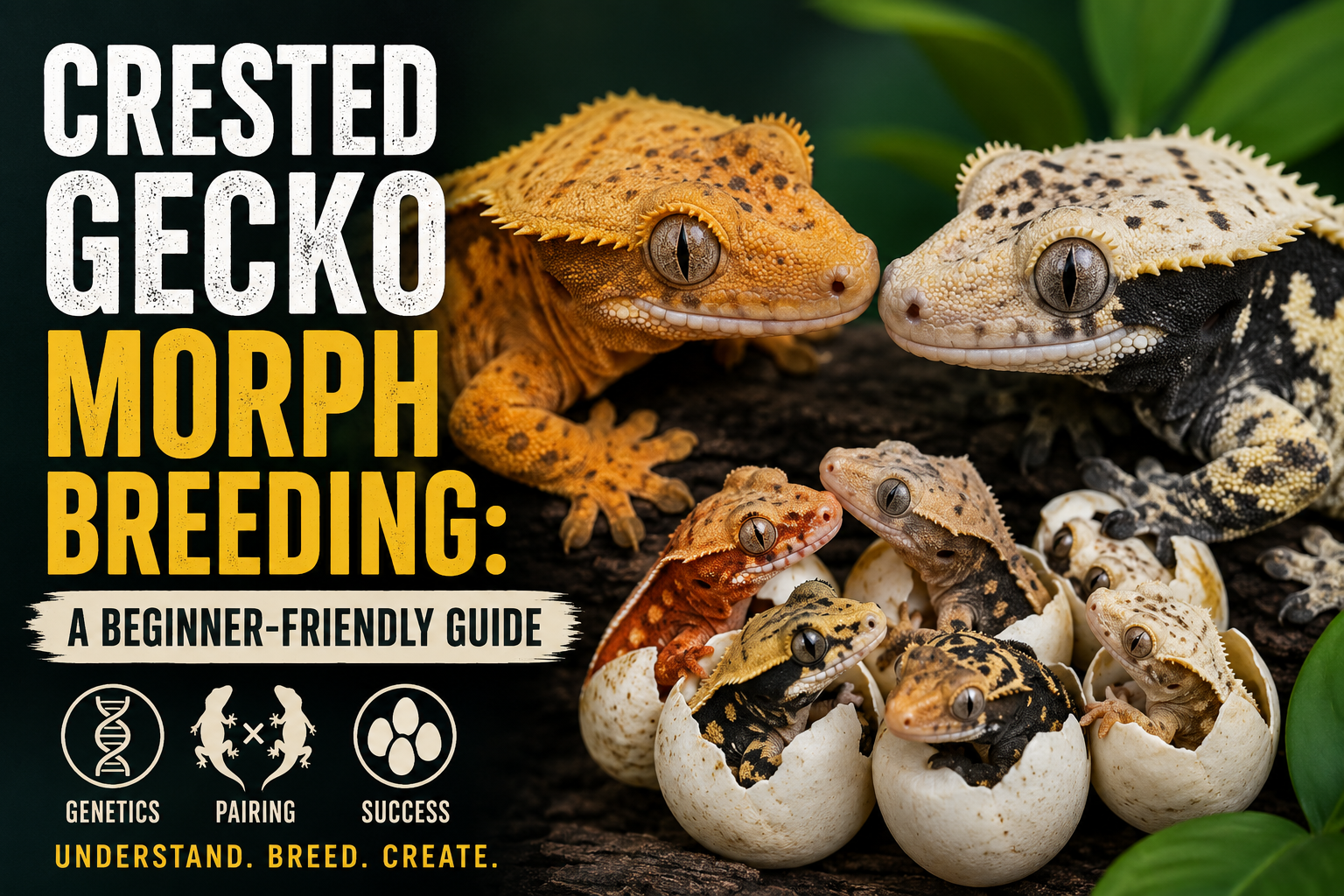
Breeding crested geckos has become one of the most exciting parts of the reptile hobby, especially for keepers fascinated by morphs, colors, and genetic traits.
From vibrant flames to high-contrast harlequins and rare Lilly Whites, morph breeding allows hobbyists to produce geckos with stunning visual patterns and unique combinations.
But successful crested gecko morph breeding is about more than simply pairing two attractive animals together. Responsible breeders understand genetics, animal health, lineage tracking, and long-term planning.
Whether you are considering your first breeding pair or looking to improve your results, understanding the fundamentals can help you produce healthier and more visually impressive geckos.
You'll want to visit our guides on crested gecko morph care and traits by visiting below, if you need a basic guide to how morphs operate:
Understanding Crested Gecko Morphs
A morph is a variation in color, pattern, or physical appearance caused by genetics. In crested geckos, morphs are not separate species. Instead, they are selectively bred traits passed from one generation to another.
Some of the most popular morph categories include:
- Flame
- Harlequin
- Pinstripe
- Dalmatian
- Lilly White
- Tri-Color
- Tiger
- Phantom
- Axanthic
Many crested geckos display multiple traits at once. For example, a gecko may be both a harlequin and a pinstripe with dalmatian spotting. Understanding how these combinations work is one of the most rewarding aspects of breeding.
Take a look at our guide on the best crested gecko morphs for beginners:
Choosing Healthy Breeding Stock
One of the biggest mistakes beginner breeders make is focusing only on appearance. While visuals matter, health and genetics should always come first.
Healthy breeding geckos should have:
- Strong body structure
- Straight spines
- Clear eyes
- Healthy appetites
- Proper weight
- No visible signs of metabolic bone disease
Lineage is also extremely important. Responsible breeders track parent pairings, hatch dates, traits, and potential genetic risks. This helps prevent inbreeding and improves the quality of future offspring.
Female crested geckos should generally weigh at least 40 grams before breeding. Males can breed slightly earlier, but maturity and overall health matter more than age alone.
Check out our guide to keeping your morph healthy by visiting below:
Understanding Basic Genetics
Crested gecko genetics can become complicated quickly, but beginners only need to understand a few core principles to get started.
Some traits are considered dominant, meaning only one parent needs to carry the gene for offspring to display it. Others are polygenic, meaning multiple genes influence the final appearance.
For example, Lilly White is a dominant trait. Breeding a Lilly White to a normal gecko can still produce Lilly White offspring. However, breeding two Lilly Whites together is dangerous because the super form is fatal before hatching.
Polygenic traits, like high pattern contrast or extreme harlequin coverage, are less predictable. Breeders improve these traits over generations through selective pairing.
This is why experienced breeders often spend years refining a specific project line.
Setting Up Breeding Enclosures
Breeding crested geckos do not require elaborate setups, but proper conditions are essential.
Adult pairs should have enough vertical climbing space, hiding areas, and stable humidity levels. Most breeders use tall enclosures with cork bark, plants, and laying containers.
Ideal conditions include:
- Temperatures between 72–78°F
- Humidity around 50–70%
- Proper ventilation
- Consistent feeding schedules
Overheating is one of the fastest ways to stress breeding animals. Crested geckos tolerate cooler temperatures better than excessive heat.
Nutrition also plays a major role in breeding success. Females especially require calcium-rich diets to support egg production.
For more info, check out our guides on the Best Tanks for Crested Gecko Morphs and Crested Gecko Morph Setups.
The Breeding Process
Once introduced, males typically begin courting quickly through chirping, head bobbing, and gentle biting behavior. If the female is receptive, mating may occur within minutes.
After successful breeding, females usually lay two eggs every 30–45 days during breeding season. Many breeders provide a moist lay box filled with substrate like sphagnum moss or vermiculite.
Eggs should be carefully removed and placed into incubation containers.
Incubation temperatures influence development speed. Most breeders incubate eggs between 70–75°F. Higher temperatures may speed up hatching, while cooler temperatures extend incubation time.
Typically, eggs hatch within 60–100 days.
Try not make mistakes during this breeding process. You'll want to check out our article on crested gecko morph mistakes to ensure the breeding process occurs smoothly.
Raising Hatchlings
Baby crested geckos require smaller enclosures with plenty of humidity and security. Hatchlings can be shy feeders during the first few weeks, so monitoring food intake is important.
Young geckos often develop their full morph potential gradually. Colors, patterns, and pinstriping may intensify as they mature. This process, known as “firing up,” is especially exciting for breeders tracking future holdbacks.
Many breeders evaluate hatchlings over several months before deciding which animals to keep for future projects.
If you're baby gecko isn't showing its morph, you'll want to read the information contained in the following article:
Learn more about "firing up" here: Fired Up vs Fired Down Explained
Ethical Breeding Practices
Responsible breeding is critical in today’s reptile market. Breeders should avoid producing unhealthy combinations, misleading buyers, or prioritizing profits over animal welfare.
Transparency matters. Buyers appreciate honest information about genetics, lineage, and possible trait outcomes.
It is also important to avoid overbreeding females. Continuous breeding without rest periods can shorten lifespan and negatively affect health.
Good breeders focus on improving the species, not simply producing large numbers of geckos.
Final Thoughts
Crested gecko morph breeding combines science, patience, and creativity into one incredibly rewarding hobby. While producing visually stunning geckos is exciting, the true foundation of successful breeding lies in healthy animals, strong genetics, and responsible care.
Beginners who take the time to understand morph inheritance, proper husbandry, and ethical breeding practices often achieve far better long-term results than those chasing rare traits too quickly.
As your experience grows, you may eventually develop your own bloodlines, improve specific traits, and even contribute something unique to the crested gecko community. The journey takes time, but for
passionate reptile keepers, that is part of the fun.