Harlequin vs Flame Crested Gecko Morphs: What’s the Difference?
If you’re new to the world of crested geckos, two morphs you’ll hear about almost immediately are the Harlequin and the Flame. At first glance, they can look very similar.
Both morphs often display beautiful contrasting colors, creamy patterns, and eye-catching dorsal markings. But once you understand the defining traits of each morph, the differences become much easier to spot.
For hobbyists, breeders, and collectors alike, knowing how to identify Harlequin and Flame crested geckos is important. These morphs can vary dramatically in price, appearance, and breeding potential.
Understanding the distinction also helps you make smarter buying decisions and appreciate the genetics behind these fascinating reptiles.
If you’re brand new to morph terminology, you may want to first this guide on Crested Gecko Morphs: The Complete Guide before diving deeper into specific morph comparisons.
What Is a Flame Crested Gecko?
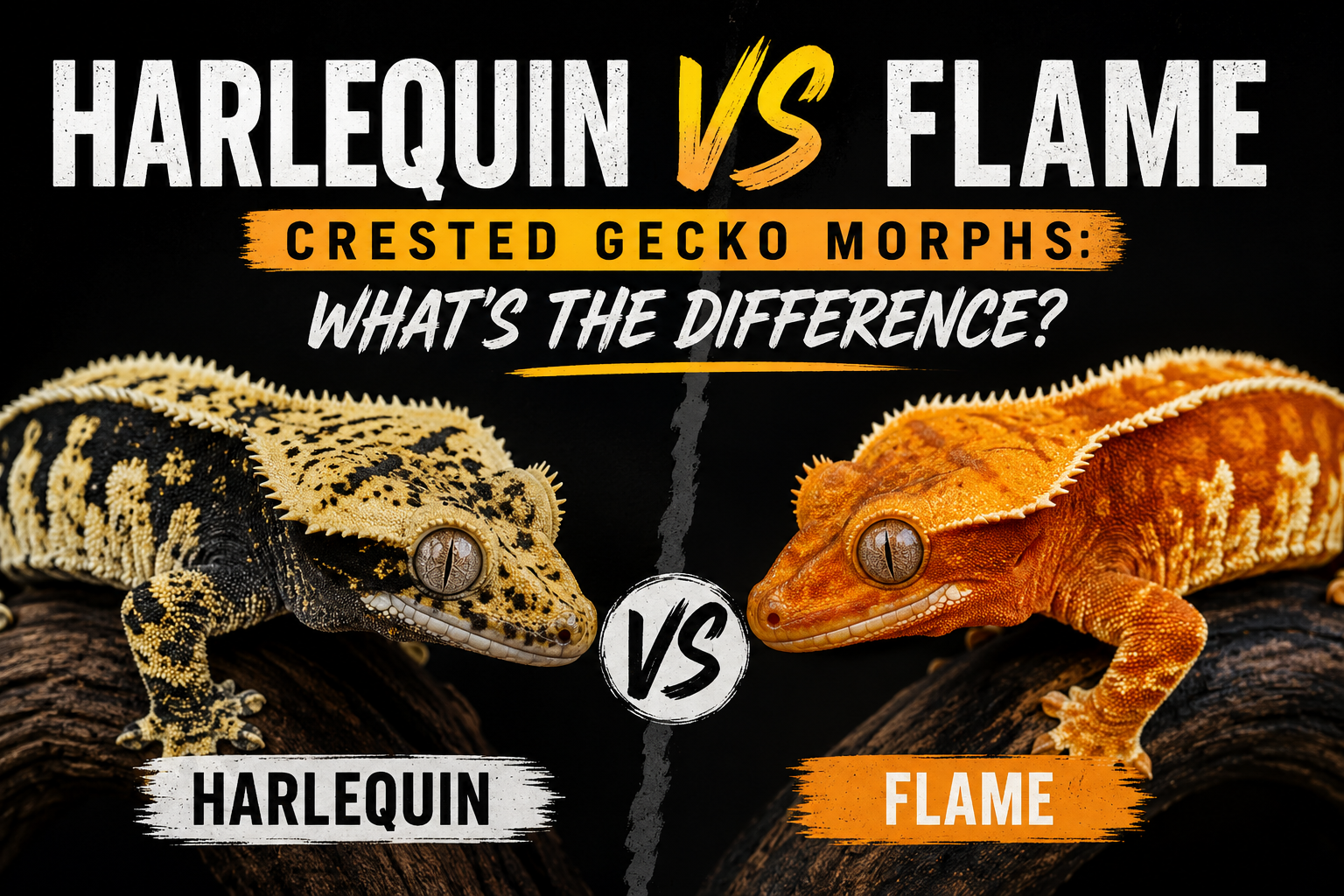
The Flame crested gecko is one of the most recognizable and popular morphs in the hobby. A Flame is characterized by a lighter dorsal pattern that contrasts against a darker base color. In simple terms, the gecko’s back and upper body are usually cream, yellow, orange, or light tan, while the sides and legs remain darker.
The key feature of a Flame morph is that most of the patterning is concentrated on the dorsal area rather than extending heavily onto the sides and limbs.
Flame geckos are often appreciated because they display strong contrast without becoming overly complex in pattern. This gives them a clean, attractive appearance that many keepers love.
Some common Flame base colors include:
- Red
- Orange
- Yellow
- Dark brown
- Black
- Cream
The dorsal pattern may become brighter or darker depending on mood, stress levels, temperature, and firing behavior. To learn more about firing behavior, visit our article on Why Crested Geckos Fire Up and Fire Down.
What Is a Harlequin Crested Gecko?
A Harlequin crested gecko builds upon the Flame pattern but adds significantly more coverage and detail. In addition to the contrasting dorsal coloration, Harlequins display substantial cream or light-colored patterning along the legs and sides of the body.
This extra side and limb patterning is what separates a Harlequin from a standard Flame.
A true Harlequin typically shows:
- Heavy lateral patterning
- Cream markings on the legs
- Increased contrast across the body
- More extensive pattern spread
The overall appearance is often much “busier” and more dramatic compared to the cleaner look of a Flame morph.
Harlequins are especially prized when they display extreme cream coverage or highly defined patterns. Some lines have been selectively bred for intense coloration and exaggerated markings over many generations.
Check out our article on How Morph Traits Are Passed Down to learn about selective breeding and genetic inheritance.
The Main Visual Differences Between Flame and Harlequin
The easiest way to distinguish these two morphs is by examining the sides and legs.
A Flame morph usually keeps most of its pattern on the back. The legs and sides may have minimal markings, but they are generally sparse.
A Harlequin, however, spreads the pattern throughout the body. The sides are more decorated, and the legs often carry thick cream patterning.
Think of it this way:
- Flames = dorsal-focused pattern
- Harlequins = full-body pattern expansion
This distinction becomes especially obvious when comparing adult geckos side-by-side.
Another important difference is overall visual complexity. Flames tend to look cleaner and simpler, while Harlequins appear more intricate and heavily patterned.
Are Harlequins More Valuable Than Flames?
In many cases, yes.
Harlequin crested geckos often command higher prices because they are considered more visually striking and genetically desirable for breeding projects. However, pricing depends heavily on quality, lineage, and additional traits.
For example, a low-expression Harlequin may actually sell for less than a high-quality Flame with excellent contrast and coloration.
Several factors influence value, including:
- Cream coverage
- Color intensity
- Pinstriping
- Structure
- Lineage
- Pattern consistency
Some Harlequins also carry additional traits like partial pinstriping, quad striping, or dalmatian spotting, which can dramatically increase desirability.
To learn more about pinstriping, quad striping, and dalmatian spotting, visit the articles below:
Can a Gecko Be Both Flame and Harlequin?
This is where many beginners get confused.
Technically, Harlequins are considered an extension or progression of the Flame morph category. Because of this, the line between the two can sometimes blur.
A gecko with moderate side patterning may be labeled differently depending on the breeder’s interpretation. One breeder may call it an “extreme Flame,” while another may classify it as a lower-expression Harlequin.
Morph identification in crested geckos is not always black and white. Unlike some reptiles with strict genetic markers, many crested gecko morphs exist on a spectrum of expression.
That’s why experience matters when identifying morphs accurately.
Which Morph Is Better for Beginners?
Both Flame and Harlequin crested geckos make excellent beginner morphs. Their care requirements are virtually identical, and neither morph is inherently more difficult to keep.
For beginners, the decision usually comes down to personal preference and budget.
Choose a Flame if you prefer:
- Cleaner, simpler patterns
- Lower average prices
- Classic crested gecko aesthetics
Choose a Harlequin if you enjoy:
- Heavier cream coverage
- More dramatic visuals
- Advanced breeding potential
- Complex patterning
Regardless of morph, proper husbandry is far more important than appearance. A healthy gecko with correct humidity, nutrition, and enclosure setup will thrive no matter its morph classification.
For tips on setups and nutrition for your gecko, visit the articles below:
- Best Tanks for Crested Gecko Morphs
- Creating Setups for Your Gecko Morphs
- Food and Nutrition Guide for Your Gecko
Final Thoughts
Harlequin and Flame crested geckos are closely related morphs, but the differences become clear once you know what to look for. Flames showcase beautiful dorsal contrast with relatively minimal side patterning, while Harlequins take things further with extensive cream coverage across the body and limbs.
Neither morph is objectively “better.” Both offer stunning appearances and make fantastic pets for reptile enthusiasts of all experience levels.
As you spend more time studying crested gecko genetics and morph development, you’ll begin noticing subtle details that separate average-quality animals from truly exceptional specimens. And for many keepers, that’s exactly what makes the hobby so addictive.