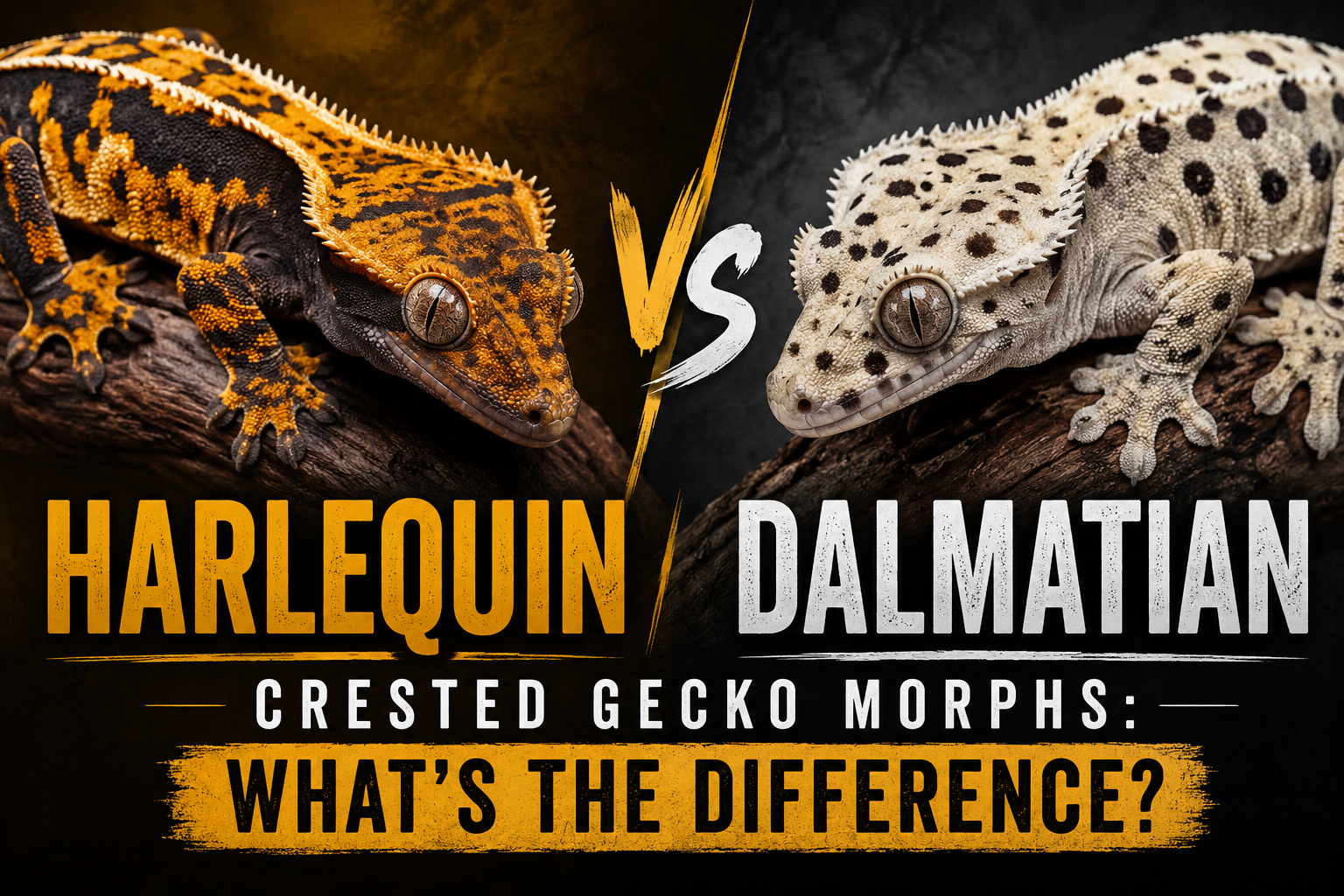
Harlequin vs Dalmatian Crested Gecko Morphs: What’s the Difference?
Among the many beautiful morphs of the Crested Gecko, two of the most popular are the Harlequin and the Dalmatian. Both morphs are highly sought after by reptile enthusiasts because of their striking patterns, unique appearances, and breeding potential.
However, despite their popularity, many beginners confuse the two or struggle to understand what truly separates them.
If you’re trying to decide between a Harlequin or Dalmatian crested gecko—or simply want to understand how these morphs differ—this guide will walk you through their appearance, genetics, temperament, pricing, and care considerations.
For readers new to the hobby, you may also want to read this article: Crested Gecko Morphs: The Complete Guide (2026) for a broader overview of morph classifications and terminology.
What Is a Harlequin Crested Gecko?
The Harlequin morph is known for its dramatic side patterning and vibrant contrast colors. A true Harlequin typically displays a darker base color with cream, yellow, orange, or white patterning along the sides, legs, and dorsal area.
What makes Harlequins stand out is the amount of pattern coverage. Unlike simpler morphs such as Flames or Bi-Colors, Harlequins usually have heavy cream development on the limbs and flanks. Many breeders consider them one of the most visually impressive morph categories available.
Common Harlequin traits include:
- Heavy side patterning
- Contrasting dorsal coloration
- Cream or yellow markings on legs and tail
- Pattern “dripping” down the sides
Some Harlequins can also develop into “Extreme Harlequins,” where the cream coverage becomes even more extensive.
What Is a Dalmatian Crested Gecko?
Dalmatian crested geckos are famous for their spots. These spots can range from tiny pepper-like freckles to large ink blotches scattered across the body and tail.
The Dalmatian trait can appear on geckos with many different base colors, including red, orange, cream, yellow, and even pattern-heavy morphs. Some Dalmatians have only a few spots, while others—known as “Super Dalmatians”—may have dozens or even hundreds.
Unlike Harlequins, which are defined primarily by pattern structure, Dalmatian morphs are defined by spotting.
Spot coloration may include:
- Black spots
- Red spots
- Greenish spots
- White spots (less common)
One fascinating aspect of Dalmatian geckos is that their spots often increase with age. Juveniles may hatch with very few spots and develop more over time.
To learn how traits pass from generation, check out the following article:
How Morph Traits Are Passed Down.
The Main Visual Differences
The easiest way to distinguish these morphs is by focusing on pattern style.
Harlequins are identified by large patches of contrasting color and ornate side patterning. Their appearance tends to look layered and dramatic, often giving them a “painted” look.
Dalmatians, on the other hand, are recognized by random spotting across the body. Even a gecko with minimal patterning can still qualify as a Dalmatian if it possesses the characteristic spots.
In some cases, the two traits can actually appear together. A gecko may be both a Harlequin and a Dalmatian simultaneously, producing a highly desirable combination morph.
To how to identify morphs easily, view the following article:
Genetics and Inheritance
Crested gecko genetics are not always as simple as dominant or recessive inheritance. Many morph traits are polygenic, meaning multiple genes influence the outcome.
Harlequin traits are believed to be selectively line-bred over generations. Breeders pair geckos with strong side patterning to intensify the appearance in future offspring.
Dalmatian spotting also appears to have a strong genetic component, though spot quantity and size can vary dramatically even within the same clutch.
Selective breeding plays a major role in both morphs. Over time, breeders have produced increasingly elaborate Harlequins and heavily spotted Super Dalmatians through careful pairing strategies.
For breeding advice for both morphs, view the following guide:
Temperament Differences
In terms of personality, there is little evidence that Harlequin and Dalmatian morphs behave differently from one another. Temperament in crested geckos usually depends more on:
- Individual personality
- Handling frequency
- Age
- Environmental conditions
Both morphs are generally calm, beginner-friendly geckos that tolerate gentle handling well once acclimated.
However, younger geckos of either morph can be jumpy and fast-moving. Patience and consistent interaction usually help build trust over time.
For temperament advice, view the following articles:
Which Morph Is More Expensive?
Pricing depends heavily on genetics, lineage, color contrast, and overall appearance.
Basic Harlequin geckos are often moderately priced, but Extreme Harlequins or high-contrast examples can become expensive quickly.
Dalmatian pricing varies based on spot density and rarity. Super Dalmatians with heavy black spotting are typically more valuable than lightly spotted individuals. Red-spotted Dalmatians can also command premium prices because of their rarity.
Factors that increase value include:
- Strong contrast
- Unique coloration
- Heavy pattern coverage
- Proven breeding lineage
- Full pinstriping combined with Harlequin traits
- Large spot density in Dalmatians
If you plan to purchase either morph, it helps to know where and how to buy them intelligently. View the articles below for advice on how to do so:
Care Requirements
Fortunately, both Harlequin and Dalmatian morphs share identical care needs because they are the same species.
Ideal care includes:
- Temperatures between 72–78°F
- Moderate humidity with daily misting
- Vertical climbing space
- A fruit-based commercial gecko diet
- Occasional feeder insects
Morph type does not significantly change husbandry requirements, although lighter-colored geckos may sometimes show stress coloration differently than darker morphs.
For feeding care requirements, you should view the guide below:
Which Morph Is Better for Beginners?
Both morphs are excellent for beginners, so the better choice usually comes down to visual preference.
Choose a Harlequin if you enjoy:
- Bold contrast
- Complex patterns
- Cream-heavy coloration
- Dramatic visual appearance
Choose a Dalmatian if you prefer:
- Unique spotting
- Randomized markings
- Cleaner base colors
- Morphs that change appearance with age
Some keepers eventually collect both because each morph offers something visually unique.
Final Thoughts
Harlequin and Dalmatian crested geckos represent two very different styles of beauty within the crested gecko hobby. Harlequins impress with their ornate side patterns and vivid contrast, while Dalmatians capture attention through unpredictable spotting and individuality.
Neither morph is objectively “better.” The right choice depends entirely on your personal taste, breeding goals, and appreciation for specific visual traits.
For many enthusiasts, understanding these differences is what makes collecting and breeding Crested Gecko morphs so rewarding in the first place.