Bi-Color vs Harlequin Crested Gecko Morphs: Understanding the Key Differences
When it comes to crested gecko morphs, there are two morphs consistently capture the attention of beginners and longtime reptile keepers alike: the bi-color and the harlequin. At first glance, these two morphs may appear somewhat similar, especially to new hobbyists.
However, once you understand the genetics, coloration, pattern structure, and breeding potential behind each morph, the differences become much more obvious.
Whether you are choosing your first crested gecko or planning future breeding projects, understanding how bi-color and harlequin morphs differ can help you make a better decision and appreciate the incredible diversity within the species.
If you need help selecting your first gecko, view our guides below on morph care and selection:
What Is a Bi-Color Crested Gecko?
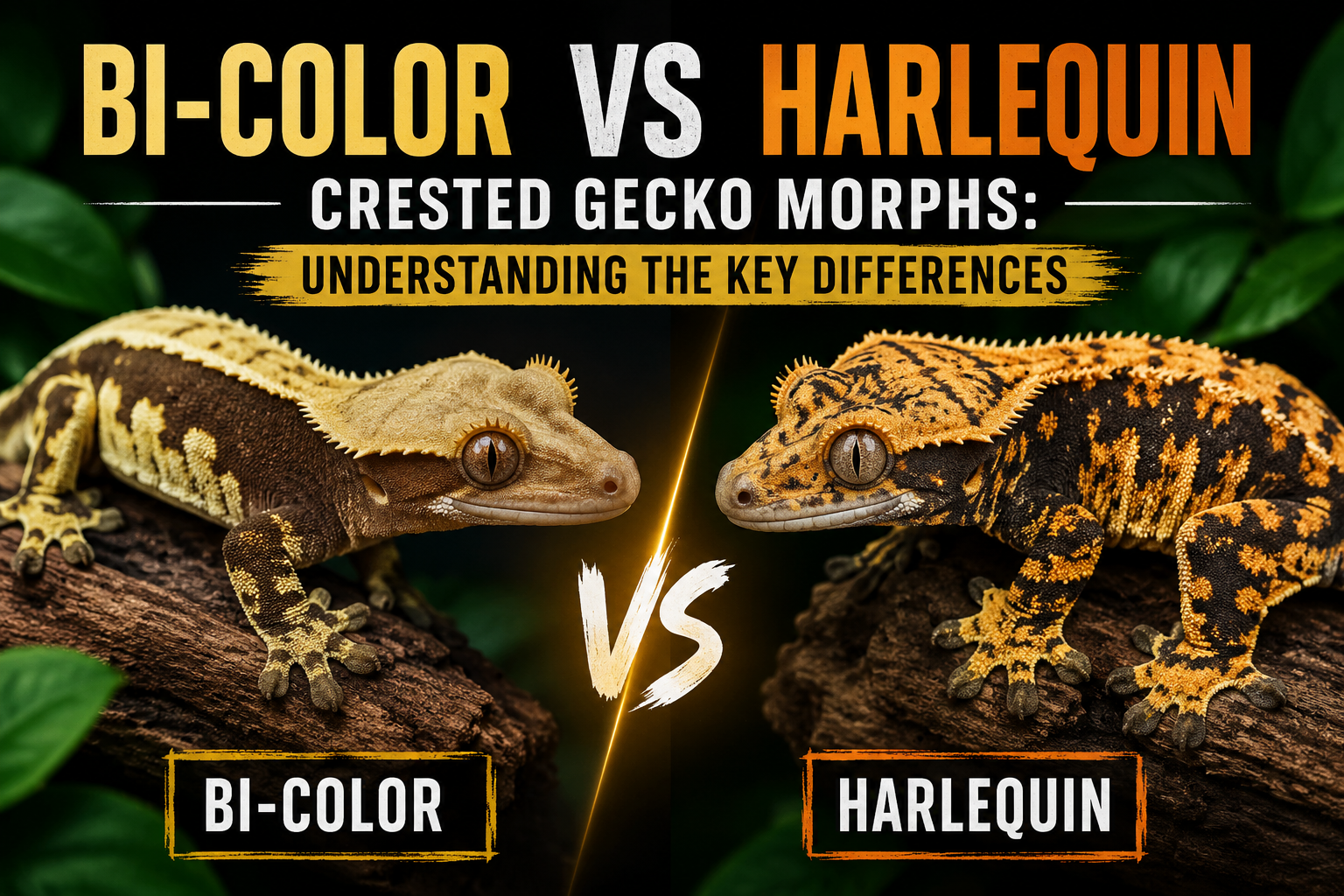
A bi-color crested gecko is considered one of the simpler morphs in the hobby. As the name suggests, these geckos typically display two main colors: a darker base color and a lighter contrasting pattern along portions of the body.
Most bi-color geckos have cream, tan, orange, or yellow coloration on the dorsal area and sides, while the rest of the body maintains a darker tone such as brown, olive, gray, or red. The patterning is usually subtle and less dramatic compared to more advanced morphs.
One defining characteristic of a bi-color morph is that the contrast between the base color and pattern is visible but restrained. The sides and limbs usually have limited pattern coverage, giving the gecko a cleaner and more minimal appearance.
For beginners, bi-color crested geckos are often appealing because they are affordable, easy to identify, and still visually attractive without the complexity of higher-end morphs.
What Is a Harlequin Crested Gecko?
Harlequin crested geckos are far more pattern-heavy and visually striking. A harlequin morph features extensive cream or bright-colored patterning across the sides, legs, and dorsal area. Unlike bi-colors, harlequins show substantial contrast and coverage throughout the body.
The defining trait of a harlequin is the amount of pattern expression. In order to qualify as a true harlequin, the gecko must display noticeable patterning on the limbs and lateral portions of the body in addition to the dorsal markings.
Harlequins can appear in a wide range of colors including orange, red, yellow, cream, black, and even lavender tones. Some also develop partial pinstriping, dalmatian spotting, or flame-like characteristics.
Because of their intricate patterns and strong visual contrast, harlequins are among the most sought-after morphs in the crested gecko hobby.
The Main Visual Differences
The easiest way to distinguish a bi-color from a harlequin is by examining the amount of pattern coverage.
A bi-color morph typically has:
- Minimal side patterning
- Limited leg coloration
- Softer contrast between colors
- Cleaner overall appearance
A harlequin morph usually has:
- Heavy side patterning
- Bright cream or yellow accents
- Patterned limbs and lateral markings
- Strong contrast between base and secondary colors
One helpful way to think about it is this: bi-colors are simpler and more understated, while harlequins are bolder and more decorative.
Many newer reptile keepers accidentally confuse flames and harlequins as well. Flames generally have dorsal patterning but less side coverage than harlequins. Harlequins take the pattern expression much further.
Color Variations and Fired-Up Appearance
Both morphs can dramatically change appearance depending on whether they are “fired up” or “fired down.”
When fired up, crested geckos display more vivid coloration. Reds become deeper, creams brighten, and contrast becomes much more intense. When fired down, the colors appear muted and pale.
Harlequins often show a much more dramatic transformation during this process because of their larger patterned areas. A fired-up harlequin can look almost entirely different from its resting appearance.
Bi-colors also experience color shifts, but the transformation tends to look cleaner and less extreme because of the simpler pattern layout.
Learn more about "firing" along with color maintenance here:
You may want to internally link here to:
Genetics and Breeding Differences
Neither bi-color nor harlequin is considered a simple dominant or recessive trait in the traditional sense. Instead, these morphs are largely polygenic, meaning multiple genes influence how much pattern and color expression develops.
Harlequins generally produce offspring with stronger pattern potential when paired with similarly patterned geckos. Breeders often selectively pair high-expression harlequins to intensify lateral coverage, cream development, and overall contrast over generations.
Bi-colors can still produce surprising offspring, especially when paired with patterned morphs carrying hidden traits. However, bi-colors are usually less predictable in producing highly expressive harlequin-style babies unless those genetics already exist within the lineage.
For breeders, harlequins are often preferred because they provide more opportunities for creating visually impressive offspring.
Learn more about breeding and morph genetics here:
Which Morph Is Better for Beginners?
Both morphs make excellent pets because the care requirements are identical. The choice mostly comes down to aesthetics and budget.
Bi-color crested geckos are often ideal for beginners because they are:
- More affordable
- Easier to find
- Less overwhelming visually
- Great introductions to morph identification
Harlequins may appeal more to hobbyists who want:
- More dramatic patterns
- Stronger visual contrast
- Breeding potential
- Higher collector appeal
Temperament, feeding habits, and enclosure needs are not determined by morph type. A harlequin does not require more care than a bi-color simply because it has more patterning.
You may want to internally link here to:
Market Value and Popularity
In the current reptile market, harlequins generally command higher prices than bi-colors due to their stronger visual appeal and breeding desirability.
A standard bi-color juvenile may cost significantly less than a high-expression harlequin with bright cream patterning and pinstriping. Lineage also plays a major role in pricing.
That said, bi-colors remain popular because many reptile enthusiasts appreciate their natural-looking appearance. Some keepers actually prefer simpler morphs over heavily patterned designer geckos.
The popularity of both morphs continues to grow as crested geckos become more mainstream in the reptile hobby.
View the articles below to learn more about pricing and buying these morphs:
Final Thoughts
Bi-color and harlequin crested geckos represent two very different ends of the pattern spectrum within the Crested Gecko hobby. Bi-colors offer a clean, understated beauty with softer contrast and minimal markings, while harlequins showcase bold patterns, dramatic coloration, and impressive visual complexity.
Neither morph is objectively better. The right choice depends on your personal taste, breeding goals, and budget. Some keepers love the simplicity of a bi-color, while others are drawn to the eye-catching appearance of a high-expression harlequin.
Either way, both morphs highlight why crested geckos remain one of the most fascinating and visually diverse reptiles available today.